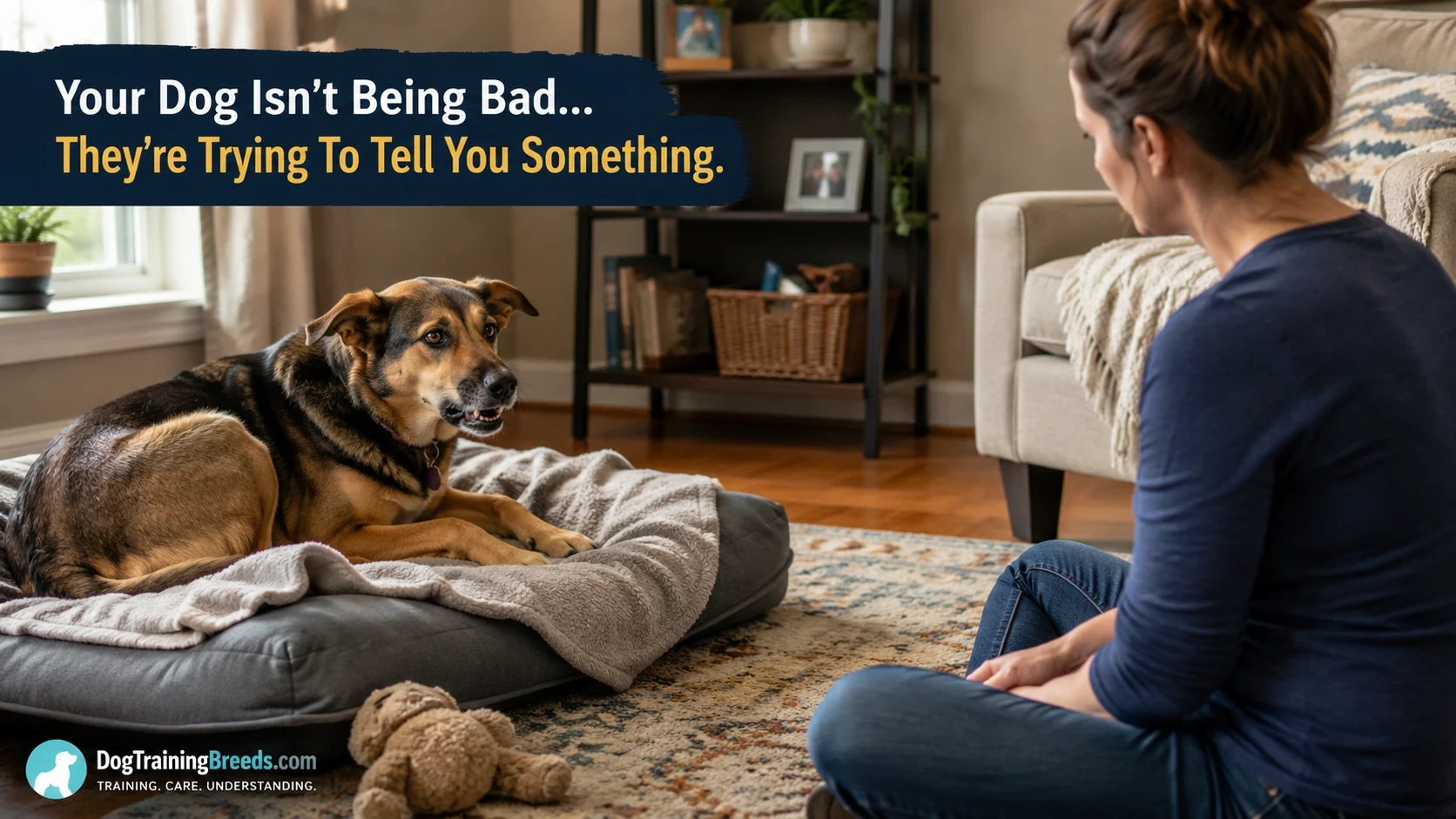
How To Stop My Rescue Dog From Growling is a question many rescue dog owners ask after hearing that first low growl from a dog they love and are trying so hard to help. It can be unsettling, especially if you’re worried the behavior could eventually lead to snapping or biting. The good news is that growling doesn’t automatically mean your dog is aggressive. In fact, growling is often your dog’s way of communicating that they’re scared, uncomfortable, stressed, or unsure about a situation.
Just a quick heads-up for transparency: Some of the links on this page may be affiliate links. If you choose to make a purchase through them, I may earn a small commission at no extra cost to you. I only recommend training resources and products that I personally believe can help rescue dog owners build a stronger relationship with their dogs.
Many rescue dogs come from uncertain backgrounds and may need time to learn that they are finally safe. Growling is often part of that adjustment process. Rather than trying to stop the growling itself, the goal is to understand what’s causing it and help your dog feel more secure.
In this article, you’ll learn what your rescue dog’s growling may be telling you, common mistakes that can make the behavior worse, and practical, positive steps to help your dog gain confidence and trust in their new home.
Why Is My Rescue Dog Growling?
When a rescue dog comes into a new home, everything from the smells to the sounds can be new and overwhelming. Growling can happen for a bunch of reasons, and once you have a sense of what’s underneath it, you can make changes that actually help. Every dog has its own story, and rescue pups may have been shuffled between shelters, homes, or even lived on the streets. Taking that into account, it’s no wonder they might be more on edge as they settle in.
Fear And Anxiety
Fear is one of the most common reasons rescue dogs growl. New environments, sudden movements, or even certain household objects can trigger those nerves. Rescue dogs might have missed out on socialization or experienced scary things, so their first instinct is to tell you they’re uncomfortable. This fear response is normal, especially in the early days.
Many rescue dogs experience anxiety during the adjustment period. If your dog seems nervous, clingy, or fearful in their new home, you may also find my guide on How To Manage Rescue Dog Anxiety helpful.
Resource Guarding
If your dog growls around food, toys, or even certain spots, they might be worried those things will be taken away. Guarding resources is pretty normal for animals that have been unsure about their safety in the past. Sometimes, the fear of losing something valuable is stronger in rescues, especially if they didn’t have reliable access to food or comfort.
Pain Or Physical Discomfort
Growling because of pain or illness is another thing I see quite a lot. If your rescue dog flinches, moves away, or growls when touched in certain spots, a vet check is the way to go. Sometimes aches or health issues hide under the radar, and your dog is just trying to protect themselves. Medical check-ups are key when a new growl pops up out of nowhere.
Lack Of Trust In New Surroundings
Trust takes time, especially for rescue dogs coming out of uncertain situations. If your dog isn’t sure about you or their new space, they might growl as a way of saying, “I’m not too sure about this.” It usually fades as routine and trust build up, but at first, it’s normal. Showing your dog you are consistent and kind helps make this phase shorter.
Past Trauma And Negative Experiences
A lot of rescue dogs have gone through tough times; neglect, pain, or harsh treatment. Certain people, animals, or objects may act as reminders, triggering growls or other signs of stress. Patience goes a long way in these situations, helping your dog realize that they’re now in a safer, more caring environment.
Rescue dogs often display a variety of behaviors linked to their past experiences. For a deeper look at what these behaviors mean and how to address them, see my guide on Rescue Dog Behavior Issues: What They Mean & How To Fix Them.
What Your Rescue Dog’s Growl Is Really Telling You
Dogs only have a limited way to let us know what’s on their mind. Growling isn’t the problem, it’s actually helpful feedback if you know what to listen for.
“I Need More Space”
If you get a low, rumbling growl when approaching, your dog is giving you (or someone else) a gentle heads up that they’re feeling crowded. Space is a big deal for dogs still getting their bearings, and respecting that request can make your dog feel heard rather than threatened.
“I’m Scared”
Fear-based growling can sound desperate or even high-pitched. It’s just your dog saying, “I’m worried about what’s happening” and hoping you’ll back off for a minute. Recognizing this signal means you can slow things down or give your dog time to adjust.
“I’m Not Comfortable”
This might come up during handling, around new objects, or if you move too quickly. It’s your dog’s way of asking for things to slow down, and acting on it can keep everyone safe. Let your dog approach new things at their own pace.
“Please Stop”
If a dog is being petted, hugged, or handled and starts growling, that’s their polite way of asking things to stop before they feel forced to lash out in other ways. It’s much better to listen to the growl now than deal with a nip later.
The Biggest Mistake Rescue Dog Owners Make
Punishing or scolding a growling dog might feel like a quick fix, but it often makes things worse and more confusing for the dog. Instead of helping your dog feel safer, this can actually make growling disappear while the root problem remains—or gets even more intense.
Why Punishing A Growl Can Backfire
If you punish your rescue dog every time they growl, they might just skip the warning altogether next time. That means you get fewer signals before a bite or stronger reaction. It also teaches your dog to see you as unpredictable or unsafe, adding more anxiety to an already stressful situation.
How Warning Signals Help Prevent Bites
Growling is a warning, a pause button that says, “I’m not okay with this yet.” When you respect that signal, you can adjust your approach and help your dog feel calmer. Encouraging your dog to skip growling actually makes things a whole lot riskier for everyone by removing that warning stage before escalation happens.
Many owners unintentionally make training mistakes that increase fear, stress, and unwanted behaviors. You can learn more in my guide on Common Dog Training Mistakes.
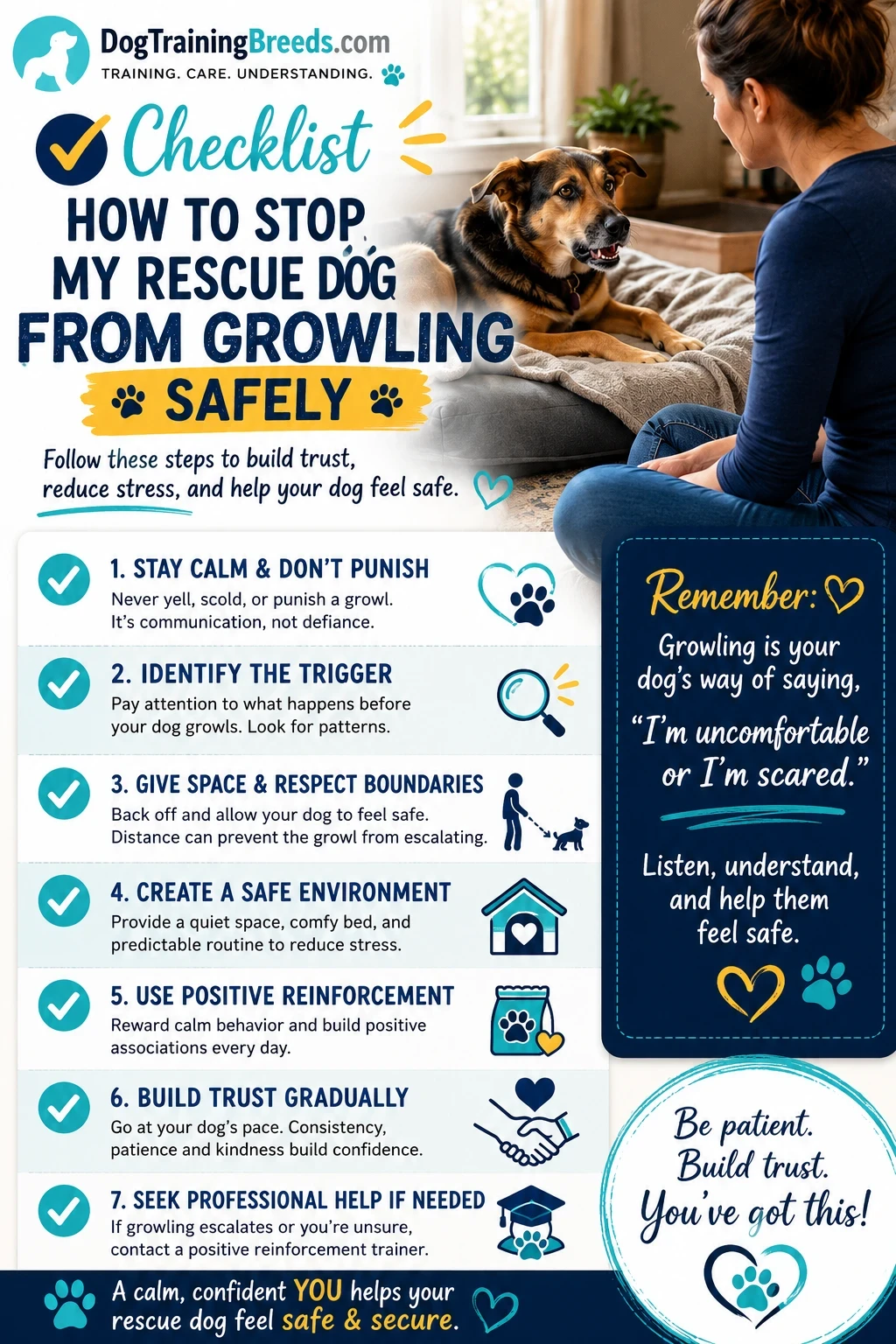
How To Stop My Rescue Dog From Growling Safely
Handling a growling rescue dog comes down to focusing on what’s causing the stress instead of trying to “fix” the growl itself. Here’s what usually works for me and a lot of dog families I’ve helped:
Step 1: Identify The Trigger
Watch for patterns. Does the growl happen near food? When certain people are around? Or only when your dog is startled? Writing it down can help spot what’s setting off those nerves. Keeping a journal of these events can reveal a lot about your dog’s needs.
Step 2: Give Your Dog More Distance
If you know what triggers the growl, increase space between your dog and the trigger. Sometimes just moving their bed to a quieter corner helps. Respecting their personal bubble is super important and really builds trust. When a dog feels safe, their need to growl often lessens.
Step 3: Create A Predictable Routine
Rescue dogs love knowing what’s coming next. Feeding, walks, and downtime all at regular times give your dog a sense of control and safety. When life feels predictable, stress drops, and your dog can focus on learning instead of worrying.
Step 4: Reward Calm Behavior
Notice and reward your dog when they stay calm in situations that usually trigger a growl. Even tiny steps in the right direction count. Treats, praise, or extra play can boost your dog’s confidence, letting them know you appreciate the effort they’re making to adjust.
Consistent positive reinforcement is one of the most effective ways to help a rescue dog feel safe and confident. If you’d like a step-by-step training program that walks you through building better behavior and communication, check out Train Pet Dog.
Step 5: Build Trust Slowly
Pushing your dog into scary situations doesn’t build trust. Instead, use slow introductions, positive reinforcement, and patience. Let your dog set the pace whenever possible; this shows you respect their limits and helps them feel protected.
If you’re looking for additional guidance, Spirit Dog Training offers positive reinforcement programs that can help fearful, anxious, and reactive rescue dogs build confidence while strengthening the bond between you and your dog.
Common Situations That Trigger Growling In Rescue Dogs
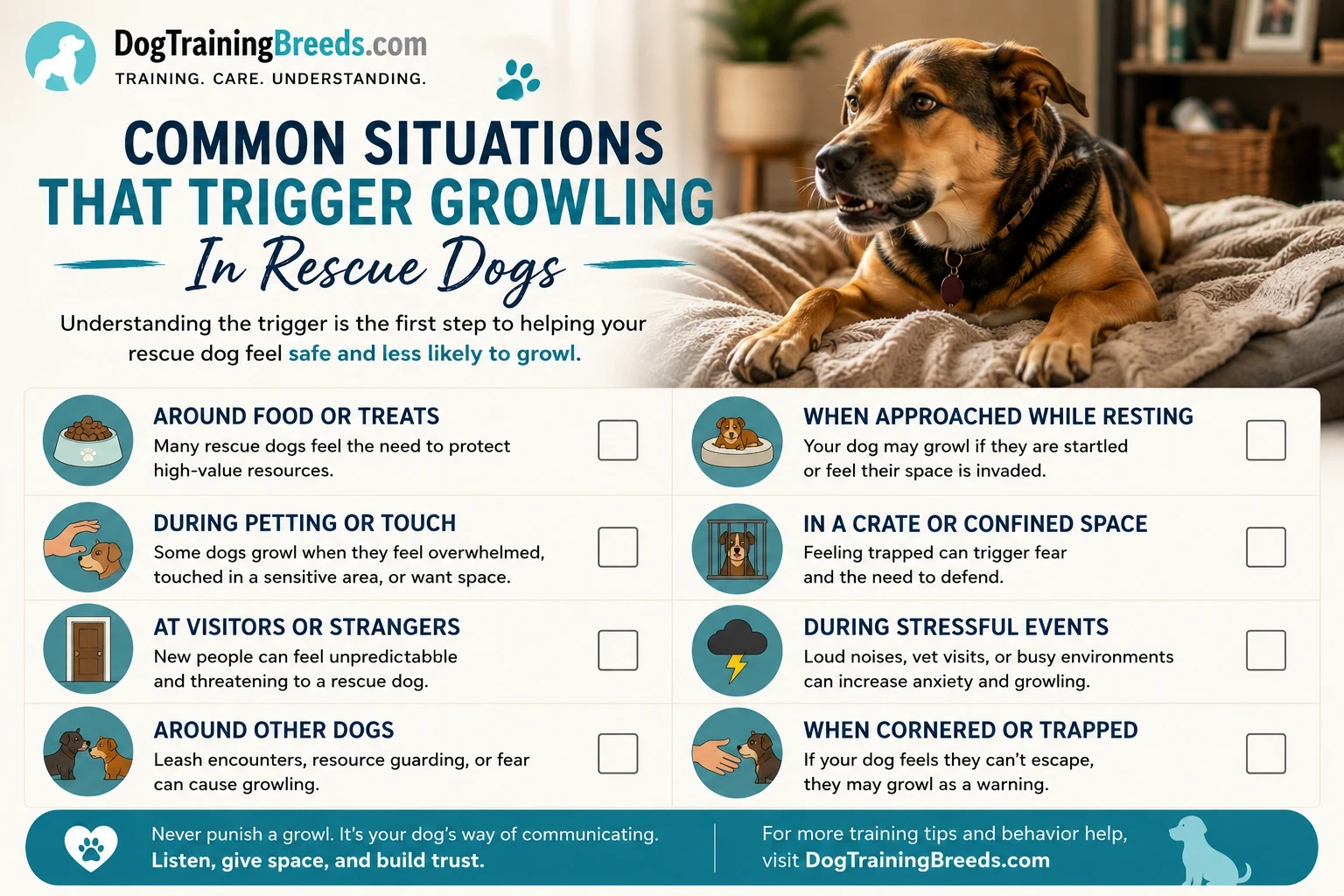
Certain situations come up a lot with rescue dogs, especially in the first few weeks at home. Understanding these can save you from common setbacks.
Growling Around Food
Your rescue dog might have skipped meals in the past or had to fight for food. Give them a quiet space away from other pets or kids at mealtimes. Allowing them to eat in peace can help curb food guarding behavior over time.
Growling During Petting
Not every dog loves petting right away, especially from strangers. Watch for body language like stiffening, turning away, or lip licking. Give them the choice to come to you instead of reaching out first; this respect helps build comfort with touch in their own time.
Growling At Visitors
New people can be overwhelming for rescue dogs. Giving them a safe spot to retreat to and asking visitors to avoid eye contact or direct approach helps everyone feel safer. Over time, your dog can learn that visitors mean no harm and may even be sources of treats or fun.
Growling At Other Dogs
Rescue dogs sometimes have sketchy pasts with other animals. Slow introductions, walks on neutral ground, and controlled play help build positive associations. Always supervise closely until you know it’s safe.
If your dog’s growling is escalating into barking, lunging, or reactive behavior around other dogs, you may also want to read my guide on How To Train A Rescue Dog With Aggression Issues.
Growling When Approached While Resting
Let sleeping dogs lie is a real thing. Many dogs, especially rescues, feel vulnerable if woken suddenly. Teach family members to respect your dog’s space when they’re chilling or napping. This simple rule can prevent a lot of grumpy responses.
When Should I Be Concerned About My Rescue Dog’s Growling?
Most growling can be managed with time, space, and a gentle approach, but sometimes it’s a sign that a deeper issue is brewing. Take changes in growling seriously; they could mean your dog needs extra support.
Warning Signs The Behavior Is Escalating
If your rescue dog’s growling turns into snapping, lunging, or full-on attempts to bite, or if you notice long spells of tension that don’t seem to get better, it’s time to get help. These are red flags that your dog’s stress is overwhelming their coping skills.
When To Contact A Professional Trainer Or Behaviorist
If your dog’s growling is making daily life difficult or feels like it could lead to someone getting hurt, connecting with a certified dog trainer or behaviorist can offer a fresh plan. Look for folks who use positive reinforcement; harsh training methods aren’t safe for rescue animals with a rough past. Professional guidance gives you the tools to keep everyone safe and makes progress possible.
Final Thoughts
Hearing your rescue dog growl can be unsettling, but it doesn’t automatically mean you have an aggressive dog. In many cases, growling is simply your dog’s way of communicating that they feel scared, uncomfortable, overwhelmed, or unsure about a situation. Rather than trying to punish the growl, focus on understanding what your dog is trying to tell you.
The good news is that most rescue dogs become more confident and secure with time, patience, and consistent positive training. As trust grows, many dogs feel less need to use growling as a warning signal. Progress may not happen overnight, but every positive interaction helps strengthen the bond between you and your dog.
If you’re struggling with rescue dog behavior challenges, don’t be afraid to seek help. The right training guidance can make a tremendous difference for both you and your dog. Most importantly, remember that your rescue dog isn’t trying to be difficult—they’re trying to feel safe. When you approach growling with understanding instead of punishment, you’re taking an important step toward building a calmer, happier, and more trusting relationship.
Need Additional Help?
If you’re looking for extra support, these training resources may help:
Spirit Dog Training – Positive reinforcement programs designed for fearful, anxious, and reactive dogs.
Train Pet Dog – Step-by-step obedience and behavior training to help you build trust and improve communication with your rescue dog.
Related Articles
This is such a much-needed reframing, treating growling as communication rather than something to punish or suppress. I think a lot of new rescue owners panic at that first growl without realizing it’s actually their dog trying to avoid conflict, not start one.
The resource-guarding and pain sections were especially helpful to me. I hadn’t connected the dots before that a sudden, unexplained growl could be a sign of physical discomfort rather than behavioral, that’s a great reminder to rule out medical causes first.
I also appreciated the “what your dog’s growl is really telling you” breakdown. Translating those different growls into plain language makes it so much easier to respond with patience instead of frustration. Looking forward to reading about the biggest mistake owners make next.
Hi Andre. I’m so glad my post was helpful to you. I wish there had been a resource like this around when I got my first dog! I swore my dog was “vicious” when he growled – not understanding that he was just trying to communicate discomfort to me. Thanks again for commenting.