Common dog training mistakes are one of the biggest reasons progress feels so frustrating and inconsistent. One day your dog is listening perfectly… and the next, it feels like everything has fallen apart.
If you’re feeling overwhelmed, second-guessing yourself, or wondering if you’re doing something wrong—you’re not alone. Most dog owners aren’t failing… they’re just making a few small mistakes that quietly confuse their dog and slow everything down.
The good news? These mistakes are incredibly common—and once you spot them, they’re completely fixable.
Just a quick heads-up for transparency: this article may include affiliate links. If you choose to buy through one of them, I may earn a small commission at no extra cost to you. It helps support DogTrainingBreeds.com so I can keep creating helpful resources for you.
Let’s walk through the most common dog training mistakes—and how to fix them so you can finally start seeing real progress.
👉 If you want a simple, step-by-step system to follow instead of guessing, check out this structured training program that shows you exactly what to do each day.
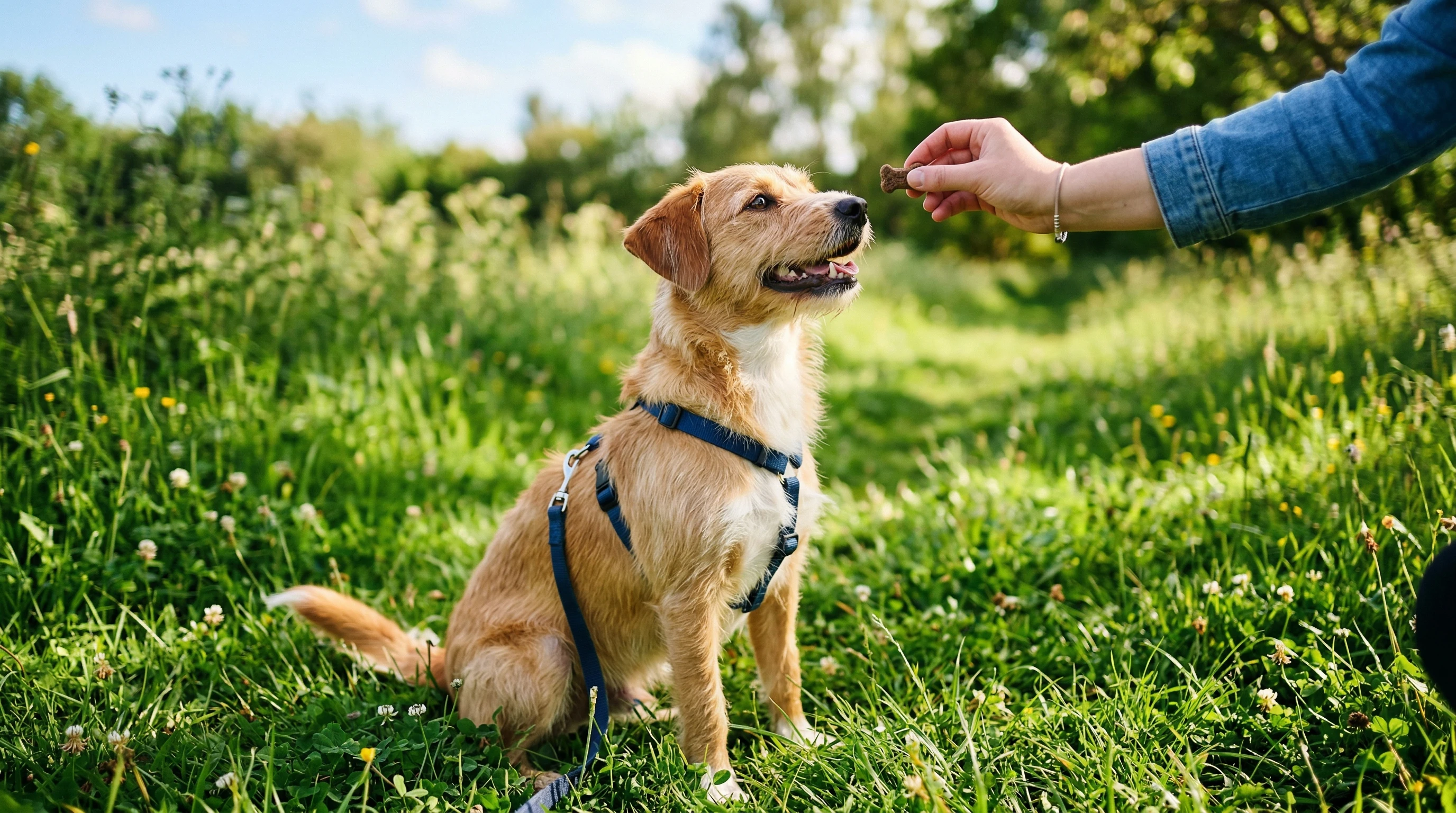
Why Dog Training Feels So Hard (Even When You’re Trying Your Best)
It’s wild how much advice gets thrown at dog owners. One trainer swears by treats, another says ditch rewards, people at the dog park say something else. Before you know it, you’re stuck second-guessing yourself. It almost feels like every time you try something new, your pup just gets more confused.
I was totally confused when I got my very first rescue.
You’re Getting Mixed Advice From Everywhere
Nothing is more frustrating than seeing ten different videos showing ten different ways to stop barking, leash pulling, or lunging. I’ve been there, bookmarking article after article, then panicking when nothing works right away.
👉 This is exactly why having one clear, step-by-step training plan makes such a big difference—you’re not jumping from method to method.
Dogs Learn Differently Than We Expect
Most humans rely on words, but dogs watch for patterns and routines. We might think we’re being clear (“sit” means sit, duh!), but tiny changes—like using a different tone or accidentally rewarding the wrong moment—can totally mix things up for your dog.
Small Mistakes Create Big Confusion
This might sound dramatic, but even minor mixups can stall progress for weeks. For example, letting your dog jump for attention even once tells them it’s worth trying every time. These innocent mistakes are super common, especially if you’re juggling rescue dogs, reactive pups, or just feel like you’ve “tried everything.”
The Most Common Dog Training Mistakes Owners Make

I can’t count how many times I’ve messed up a training routine with a few simple errors. Here are the biggest slipups I see (and sometimes still do myself):
Being Inconsistent With Rules
This one sneaks up on all of us. Maybe you let your dog on the couch sometimes but not when guests are around. Or you hand out treats for sitting, but ignore them the next day. Dogs notice these small changes and honestly, it makes their world a bit confusing. Consistency, even if it feels strict, helps your dog learn faster and feel safer.
Accidentally Rewarding Bad Behavior
I used to give my dog pets when she barked because I thought it would calm her down. Turns out, she thought barking equals an attention jackpot. Dogs learn super fast what gets them what they want, even if it’s just you making eye contact or talking to them when they’re jumping up.
👉 If you’re not sure what you might be reinforcing without realizing it, this guide on rescue dog behavior issues breaks it down in a really eye-opening way.
Expecting Too Much Too Fast
Scrolling through social media, it looks like every other dog learns new tricks in a week. Real talk: most training takes way longer than we think. Dogs need loads of repetition in all sorts of situations before things really stick. Being impatient usually just frustrates you and confuses your dog even more.
Using Punishment Instead of Guidance
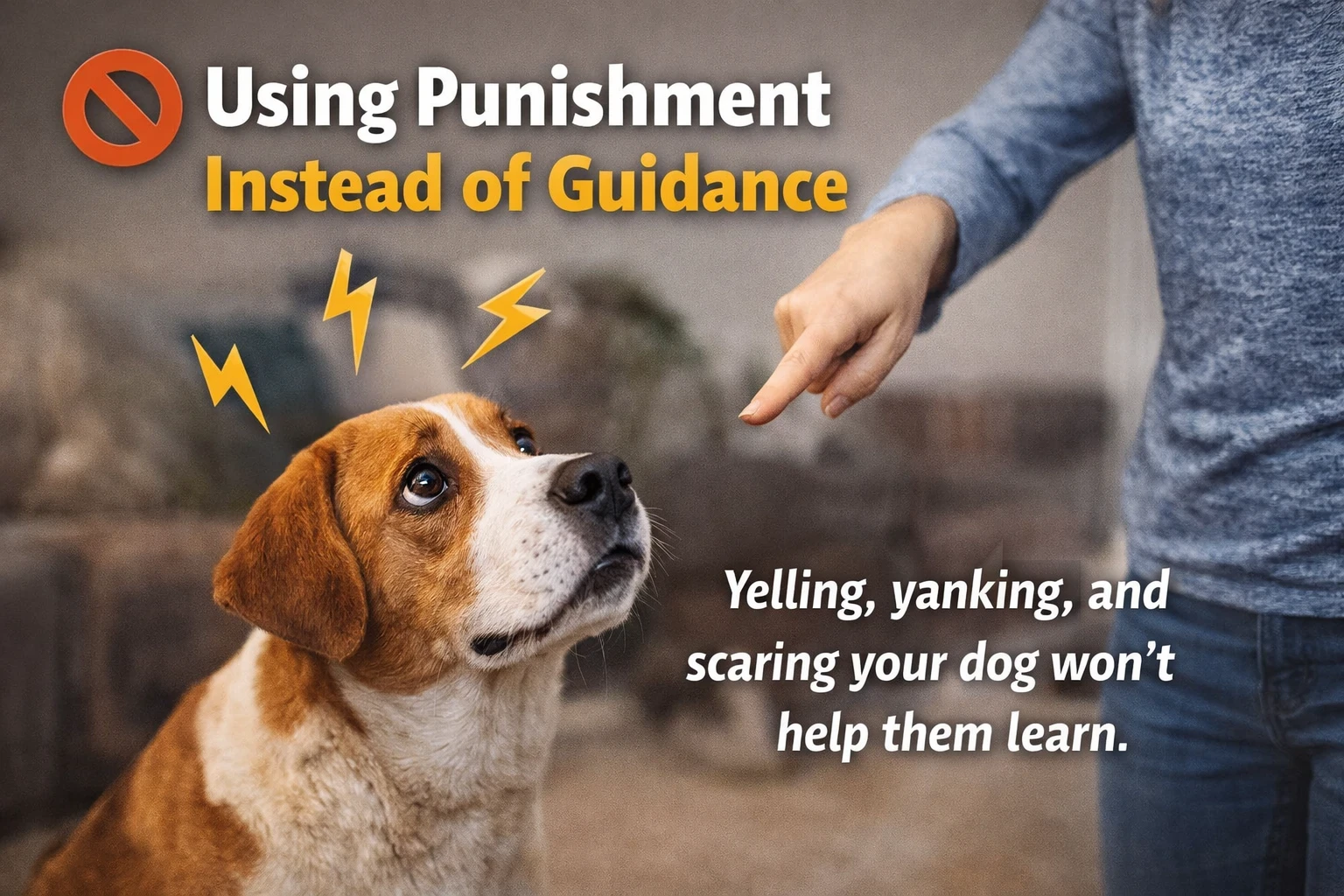
It might be tempting to scold or even yank on the leash when your dog messes up. But harsh punishment often just scares your dog or shuts them down. They’re not plotting against you, they’re just not sure what’s expected. Dog training works best when you’re clear, calm, and reliable, even when your dog messes up.
Not Understanding the Root Cause
Sometimes barking, lunging, or ignoring you isn’t your dog being “bad.” It could be fear, anxiety, or pure boredom. My rescue dog used to bark nonstop during walks, but it wasn’t stubbornness—it was just stress.
Figuring out the real reasons behind a behavior totally changes how you approach training. You might stumble upon new triggers or even realize your pup just needs a bit more exercise.
👉 A lot of owners miss this completely—especially with barking and reactivity. If that’s something you’re dealing with, this breakdown on why dogs bark at nothing can really help connect the dots.
Training Only in Easy Environments
It’s awesome if your dog sits perfectly in your kitchen, but the real world is way more distracting. Practicing only at home doesn’t teach your dog to listen when squirrels, bikes, or other dogs are around.
👉 This is also why leash issues show up so strongly outside—if your dog pulls like crazy, this guide on stopping leash pulling will help you fix it step by step.
Gradually working up to busier environments helps your dog learn to focus, no matter what’s happening. Try practicing in your backyard, then taking it to a quiet sidewalk before braving the local park where there’s much more going on.
Talking Too Much Instead of Being Clear
I’ve been guilty of saying “sit, sit, SIT, please sit!” a hundred times in a row. Problem is, dogs tune out when there’s too much chatter. Short, clear commands and reliable hand signals work best. Timing a reward for the right moment matters a lot more than repeating yourself.
Giving Up Too Early
There’s always that phase where it feels like nothing is working. Seriously, every dog owner has hit this wall. The urge to give up or switch methods (again) is real. Sometimes, staying the course for just one more week makes all the difference. Patience can be all it takes for something to finally click for your pup.
👉 This is usually the exact point where having a structured program keeps you from starting over again and again.
Biggest Mistakes That Make Behavior Worse (Quick Checklist)
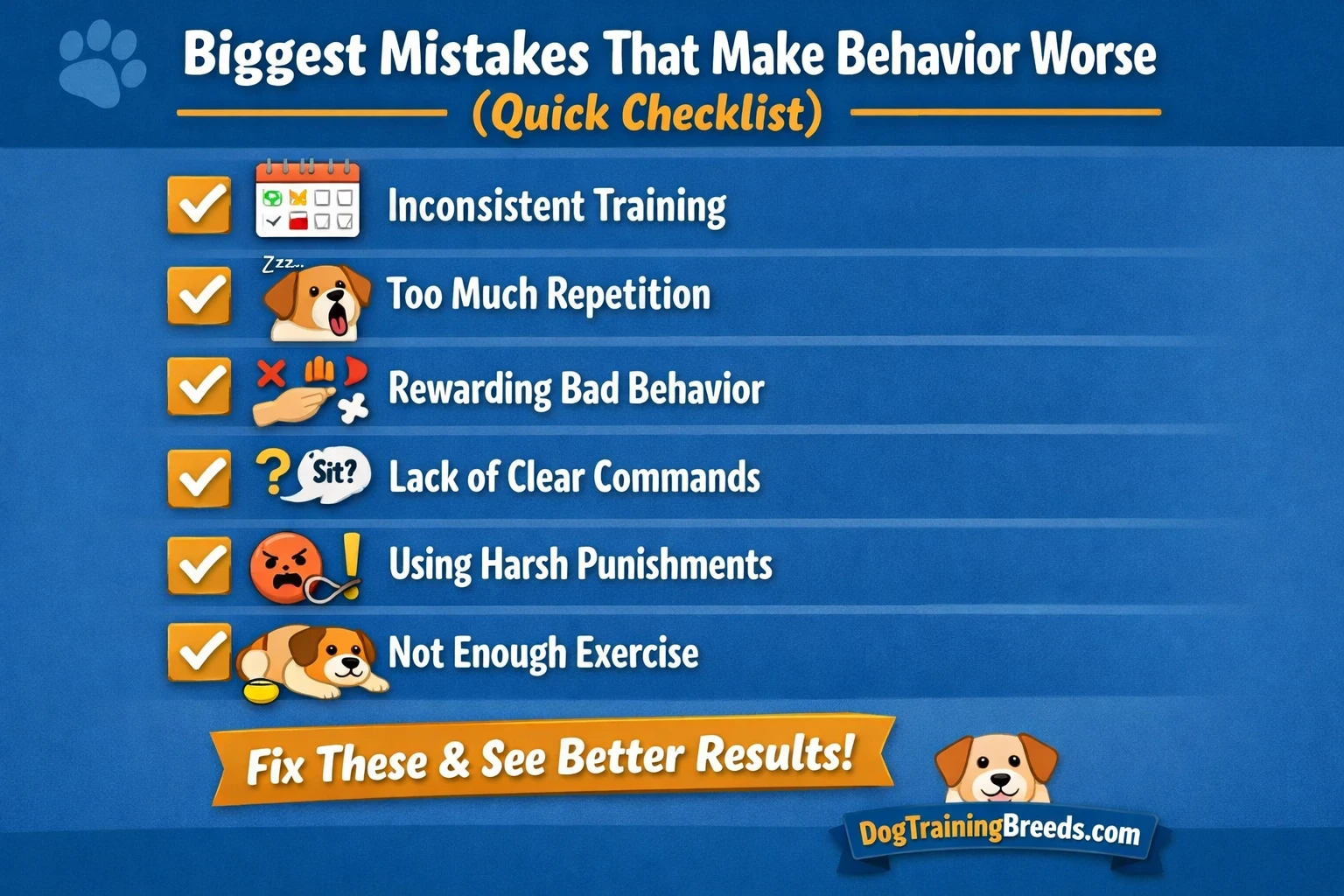
- Inconsistency with rules or routines
- Rewarding at the wrong moment (even with eye contact or talking)
- Drilling commands without a reward
- Training when you or your dog feels frustrated
- Skipping daily practice and relying on long sessions instead
Seeing these on paper can be a little sobering, but they’re totally common. Recognizing them is the first step to changing things for the better.
How to Fix These Dog Training Mistakes (Step-by-Step)
If your dog training isn’t going the way you’d hoped, a few small pivots can make a big difference. Here’s what helps most:
👉 If you want this broken down into a daily plan you can follow (instead of trying to piece it together yourself), this step-by-step training program walks you through exactly what to do.
Simplify Your Commands
Stick to one word per behavior (“sit” or “down”, not “can you please sit for me, buddy?”). Pair a clear hand signal with each cue, and always use the same phrase or gesture so your dog isn’t guessing what you want.
Reward the Right Behavior Immediately
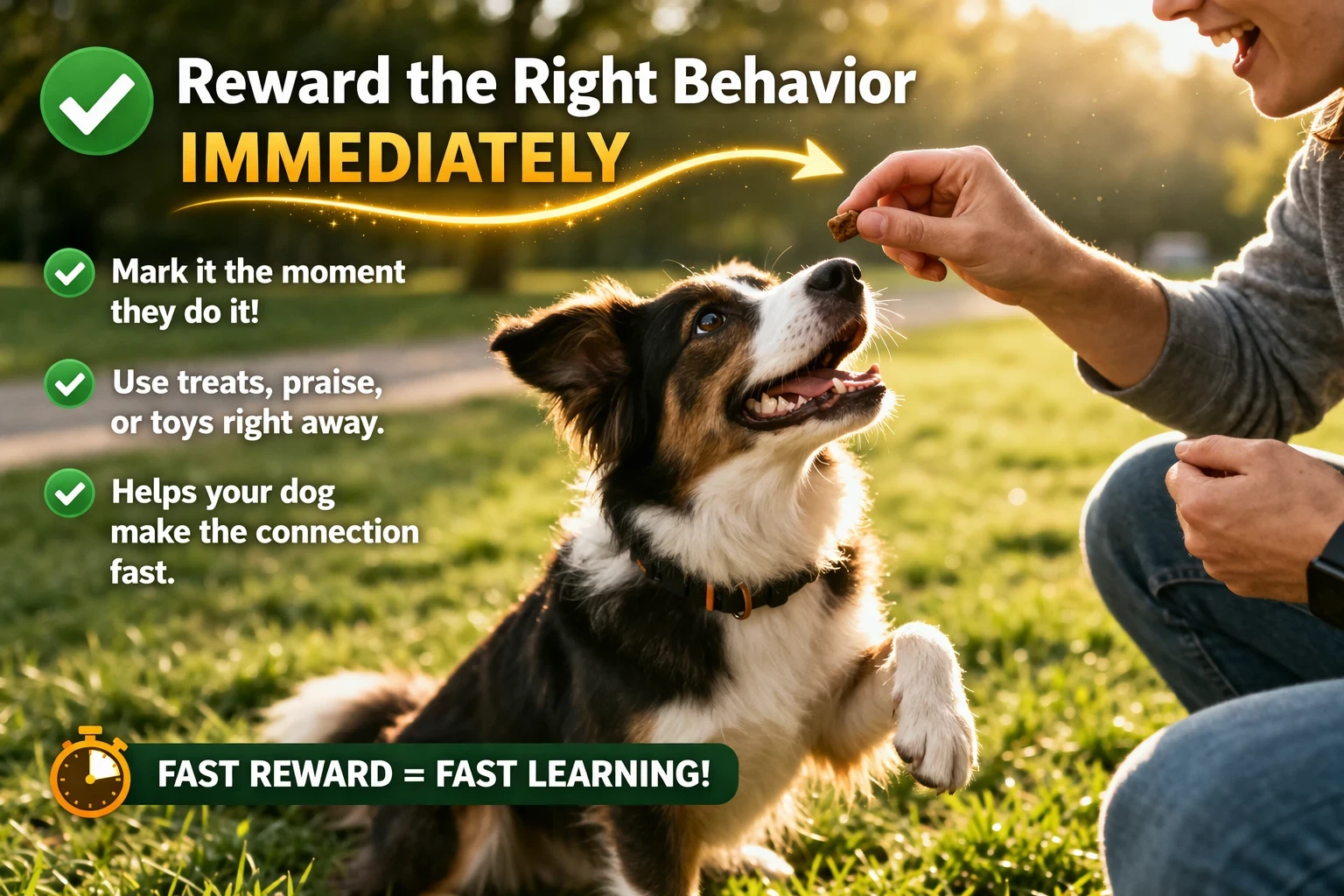
As soon as your dog does what you want, even if it’s just a split second, reward them right away. Timing treats, praise, or play for the exact moment your pup sits, looks at you, or walks calmly teaches them that behaving pays off.
Create Consistent Rules Everyone Follows
This part is super important for families or roommates. If one person lets the dog jump while another scolds them, the dog will always test boundaries. Make a quick house chart or simple reminder so everyone’s on the same page. Setting clear boundaries and routines helps your dog feel safer and understand what’s expected at all times.
Train in Small, Repeatable Sessions
Ten minutes a day beats an hour on the weekend. Dogs learn best through short, fun training sessions. End each session with a success, even if it’s small, so your dog always finishes confident. Incorporating training into daily routines, such as practicing a “sit” before going out or “down” before mealtime, helps reinforce good habits without overwhelming your pup.
Practice in Real-Life Situations Gradually
Once your pup gets the hang of a cue indoors, move to your backyard, driveway, then to the sidewalk, and eventually the park. Adding distractions a little at a time helps your dog generalize what they’ve learned.
Don’t rush—let your dog master each level before making things harder, and always celebrate small wins together.
One thing that made a huge difference for me was following a structured program that includes video walkthroughs and simple daily routines you can actually stick to.
👉 You can check it out here and see how it works step-by-step.
I found their guides really practical for building a routine my dog and I could actually stick to. Exploring some online communities or groups can also give you extra tips and support if you ever feel stuck or frustrated along the way.
The Truth Most Dog Owners Don’t Realize

Most dogs aren’t being stubborn or out to embarrass you. Usually, they just don’t understand what you want yet. Once I started communicating clearly and consistently, my dog’s “bad habits” faded fast.
👉 That’s why having a clear system matters so much—it removes the guesswork and helps your dog learn faster.
Your Dog Isn’t Stubborn—Just Confused
If you find yourself losing patience or feeling defeated, remember: your dog wants to get it right. They really do! Make it clear, keep it calm, and celebrate the wins, no matter how tiny. Sometimes, just a little tweak in how you ask or a bit more patience makes a world of difference.
Communication Changes Everything
As soon as you swap out frustration and mixed signals for reliable routines and rewards, training gets easier for both you and your pup. Your relationship will feel way better, and your dog will be so much happier to work with you.
Try using more positive reinforcement and don’t be afraid to try new rewards—sometimes a favorite toy can be just as motivating as a treat!
Wrapping Up
Making mistakes in dog training doesn’t mean you’re failing or ruining your dog. Most dog struggles come not from “bad dogs” but from habits that are super common and totally fixable. You’re not alone, you’re not too late, and your dog can absolutely make progress.
👉 If you’re tired of second-guessing everything and just want a clear plan that works, this step-by-step training program can help you finally feel confident in what you’re doing.
The biggest thing you can do is start fresh, pick one mistake to fix, and just see what improves. Chances are, you’ll both feel better fast. And remember, training is a lifelong adventure you and your dog get to tackle together—just keep going, one small step at a time.
👉 👉 Check it out here and start seeing real progress with your dog.
Thanks for the information Shalisha.
I understand completely as we have a small pup that has good moments, followed by not so good moments. You provided great tips on what to look for and what options can be swappable. Also, this helps to understand some of the reasons why your dog might act as they do. It’s true, what you mentioned about mixed messages as we’ve all been there and I can see how our dog would be completely confused by commands, treats, or lack of.. Your insights are a great way to help dog owners, plus the fact that you offer a step-by-step training program to help follow the process without guesswork is as added bonus..
Hi Drew! Thanks for your thoughtful comment. Yes, for so long, I gave my dogs mixed and inconsistent messages. I didn’t realize the importance of being consistent and keeping commands simple. I’m so glad I got it right and glad to share with all of my readers. Thanks again for stopping by.