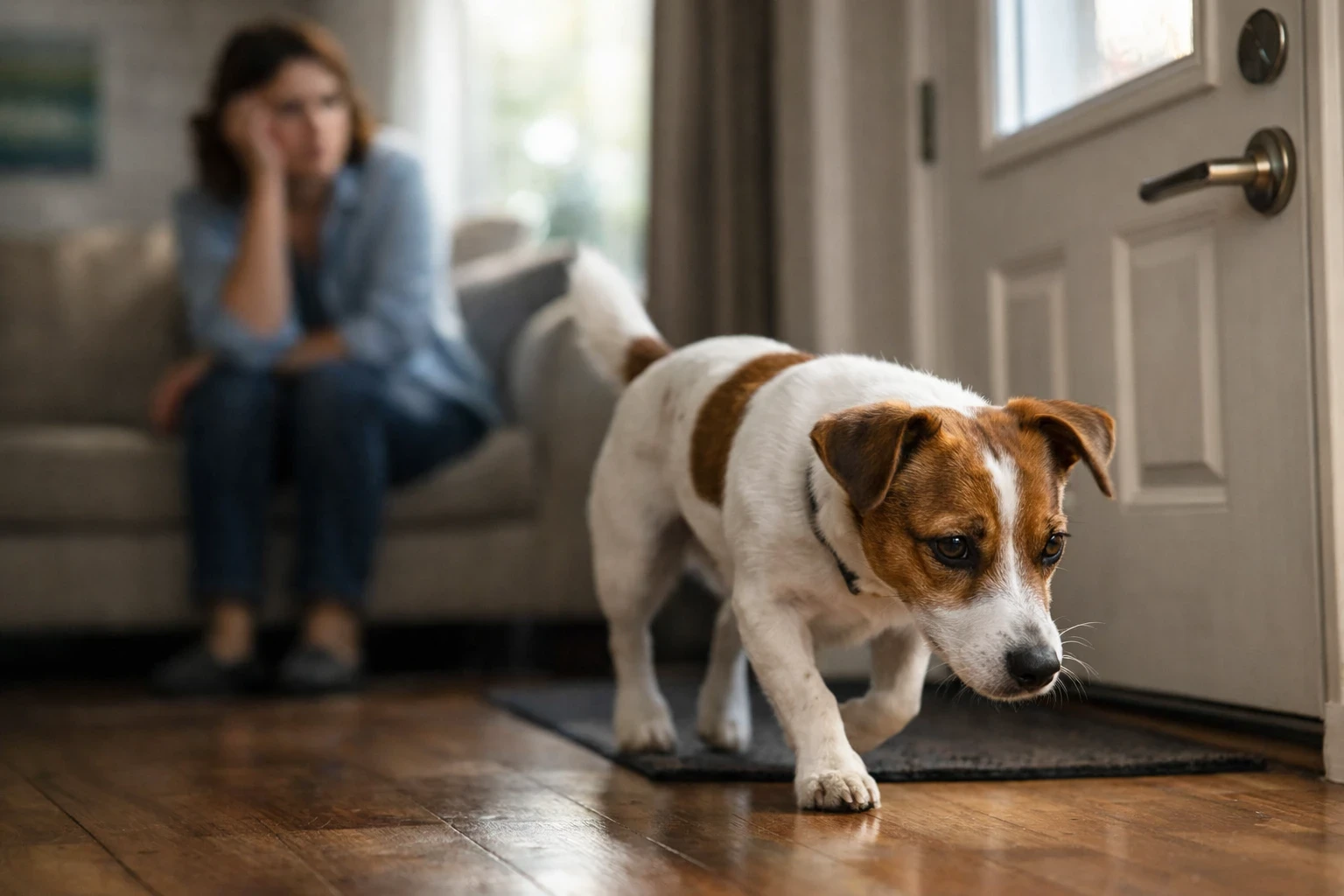
Why is my rescue Jack Russell Terrier so anxious? If your dog is bouncing off the walls, barking at every little sound, following you from room to room, and just can’t seem to relax—no matter how much reassurance you give—you’re definitely not alone.
It’s exhausting, and it can leave you feeling frustrated or even questioning if you made the right decision bringing them home. The truth is, Jack Russells are already an intense, high-energy breed, and when you add in the uncertainty of a rescue background, that anxiety can show up in a big way.
Here’s the reassuring part: this isn’t rare, and it doesn’t mean your dog is beyond help. These behaviors are incredibly common with rescue Jack Russells, especially for first-time owners. Once you understand what’s really driving the anxiety, you can start taking control and help your dog become calmer, more settled, and easier to live with.
If you’re still learning how rescue dog behavior works in general, it helps to understand the bigger picture first. My guide on rescue dog behavior issues and what they really mean will she light on their behavior and give you much needed relief that you’re not doing it wrong.
Just a quick heads-up for transparency: this article may include affiliate links. If you choose to buy through one of them, I may earn a small commission at no extra cost to you. It helps support DogTrainingBreeds.com so I can keep creating helpful resources like this.
👉 If your Jack Russell’s anxiety feels constant or overwhelming, this step-by-step training program is designed specifically for the breed and shows you exactly how to calm and structure their behavior.
The Truth About Jack Russell Temperament (That Most Owners Don’t Expect)
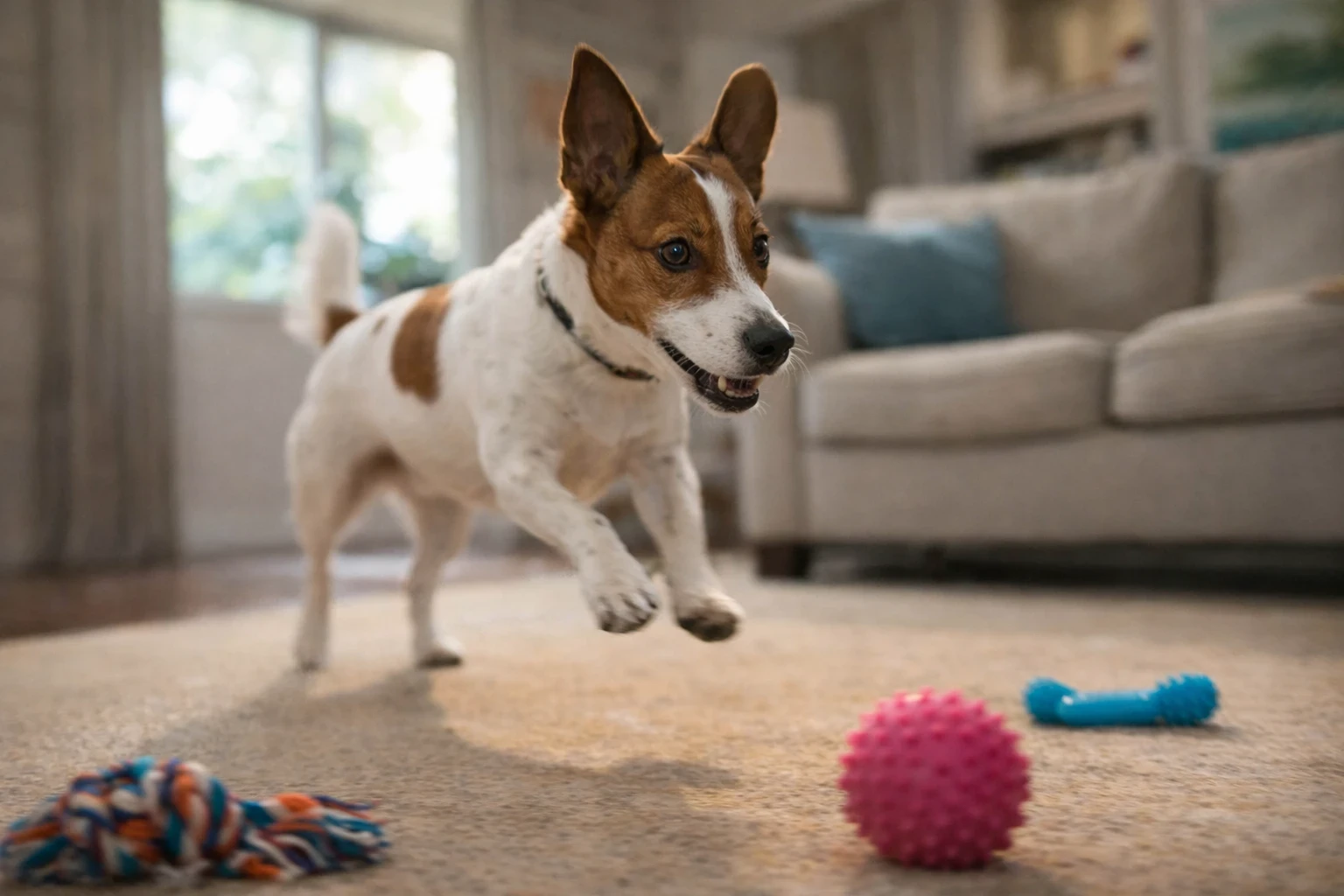
Jack Russell Terriers come with a reputation for being energetic and clever, but the real story goes even deeper. Bred to work, chase, and problem solve, these little dogs have drive most people don’t expect in a small package. That intensity can look a lot like anxiety, especially when you place them in modern home life.
High energy and high intelligence always need an outlet
Jack Russells were created to work all day, dig, chase, and think for themselves. Without jobs to do, their brains and bodies go into overdrive. This means if you don’t provide enough direction, all that extra energy often turns into behaviors that seem anxious, such as pacing, barking, chewing, or even spinning in circles.
Why Jack Russells often seem “on edge”
This breed is built for high alertness. In their original roles, being reactive and aware was a real advantage, since spotting a rat before it scurried away meant success. In a quiet house with unfamiliar routines, that same alertness can quickly become overwhelm and jumpiness.
How anxiety shows up at home
When a dog like this lands in a rescue situation, and then a new home with new smells, rules, and sounds, their instincts can go into overdrive. Anxiety in Jack Russells can show as constant motion, barking at noises, and being unable to calm down. It’s not about disobedience. It’s about unmet biological needs and not knowing what to expect next.
Why Rescue Jack Russell Terriers Struggle With Anxiety
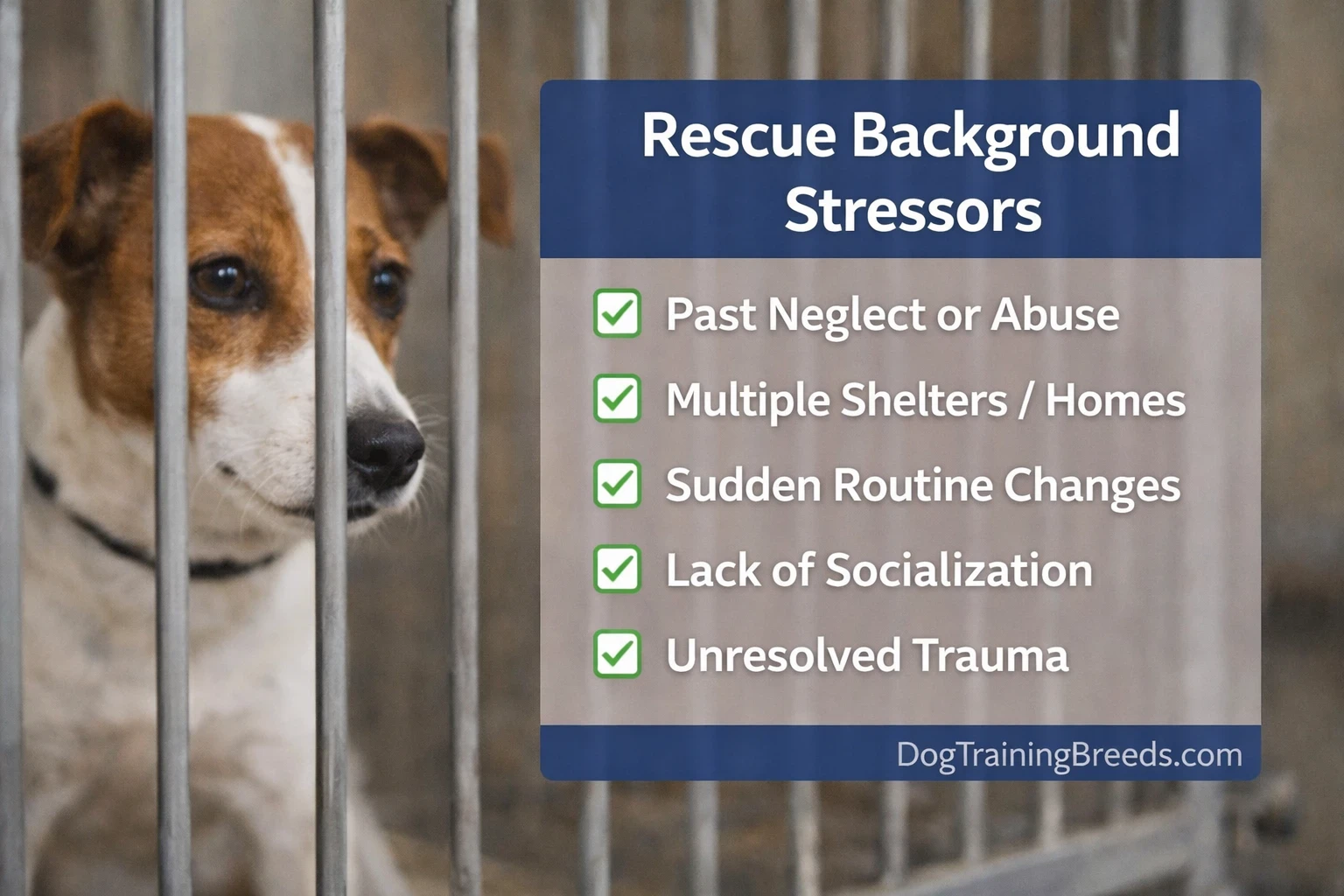
While Jack Russells tend to be a high anxiety breed, rescue dogs have a few extra hurdles that pile on top. Sometimes it’s about history; sometimes it’s just the shock of a big change in their world. Here’s what could be going on with your pup:
Past trauma or unstable environments
Many rescue dogs weren’t raised in one loving home. Some bounced between several, faced neglect, missed key socialization, or had frightening experiences (even if you don’t know the details). Trauma or instability tells their brain to stay on high alert just to survive. That nervous buzz doesn’t switch off the minute they walk through your front door.
Lack of structure before adoption
Some rescue Jack Russells never had boundaries or routines. A dog who got to run wild in a backyard or had no clear leadership may be used to making their own rules. When they land in a new place with a caring owner, all this sudden attention, rules, and structure can throw them for a loop and ramp up anxiety.
Sudden life change: the new home shock
Even in the best circumstances, moving to a new home is stressful. New people, new smells, new schedules; your Jack Russell doesn’t know what’s safe or normal yet. Dogs crave predictability. When everything changes overnight, it makes sense they’re nervous.
Overstimulation in a new environment
Floors, doorbells, TVs, traffic, and neighborhood dogs are all new information to process. What’s ordinary to you is overwhelming to a dog not used to such a busy home. Sensory overload can look a lot like separation anxiety or overexcitement, even when it’s really just your dog trying to figure out what’s important.
Signs Your Jack Russell’s Anxiety Is More Than Just Energy
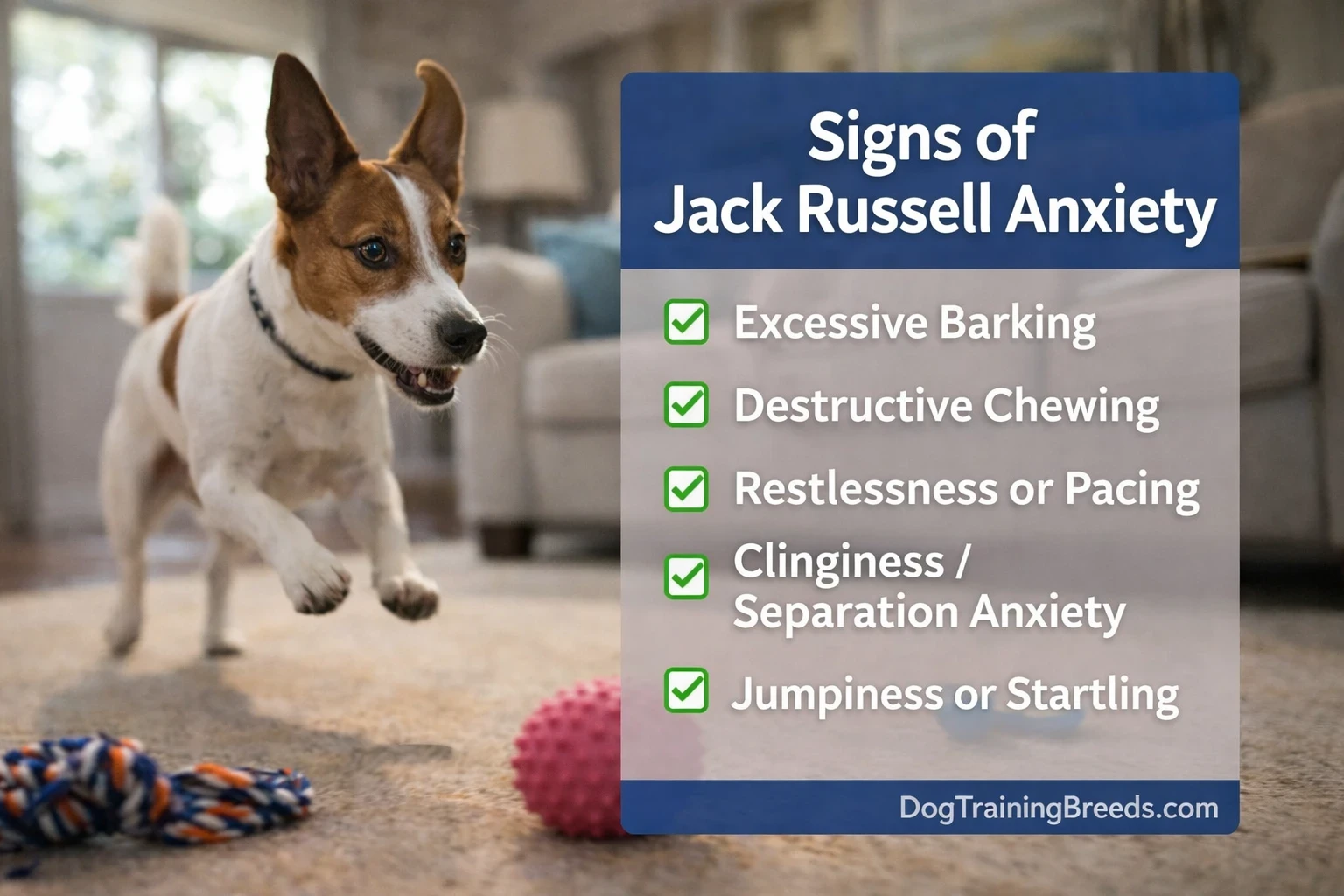
High energy is normal for this breed, but true anxiety takes things up a notch. There are some clear indicators that go beyond usual terrier hyperactivity.
Pacing, whining, and inability to settle
If your Jack Russell just can’t relax, winding around your legs, constantly moving from room to room, or endlessly whining, they’re probably feeling anxious, not just bored. Dogs who flop down and spring right back up at every little sound are showing their nerves, not their smarts.
Barking at everything (or nothing at all)
While Jack Russells love to bark, anxious barking tends to be excessive, frantic, or even at invisible triggers. It’s a way to relieve tension and try to control their environment. Pay attention to whether the barking is matched to real events, or if it happens for no obvious reason.
👉 If your dog seems to bark at things that don’t even exist, you’re not imagining it—learning why dogs bark at nothing and how to stop it can make a big difference.
Destructive behavior when left alone
Chewing furniture, scratching doors, tearing up bedding, or other destructive acts when you’re gone often signals separation anxiety, not “bad” behavior. The dog isn’t angry; they’re panicked. This kind of behavior often ties back to deeper rescue-related stress patterns that many owners don’t recognize at first.
Clinginess or panic when you leave
Does your dog follow you everywhere? Do they get worked up from the moment you grab your keys? Stuck-on behavior or meltdown when you head out is a classic anxiety sign, especially common in rescue Jack Russells adjusting to a new routine. Find out what rescue dog behavior issues really mean in this guide.
👉 If you’re seeing several of these signs, it’s a clear signal your dog needs more structure, not just more exercise. This is where a guided training plan can make a huge difference.
The Biggest Mistakes That Make Jack Russell Anxiety Worse
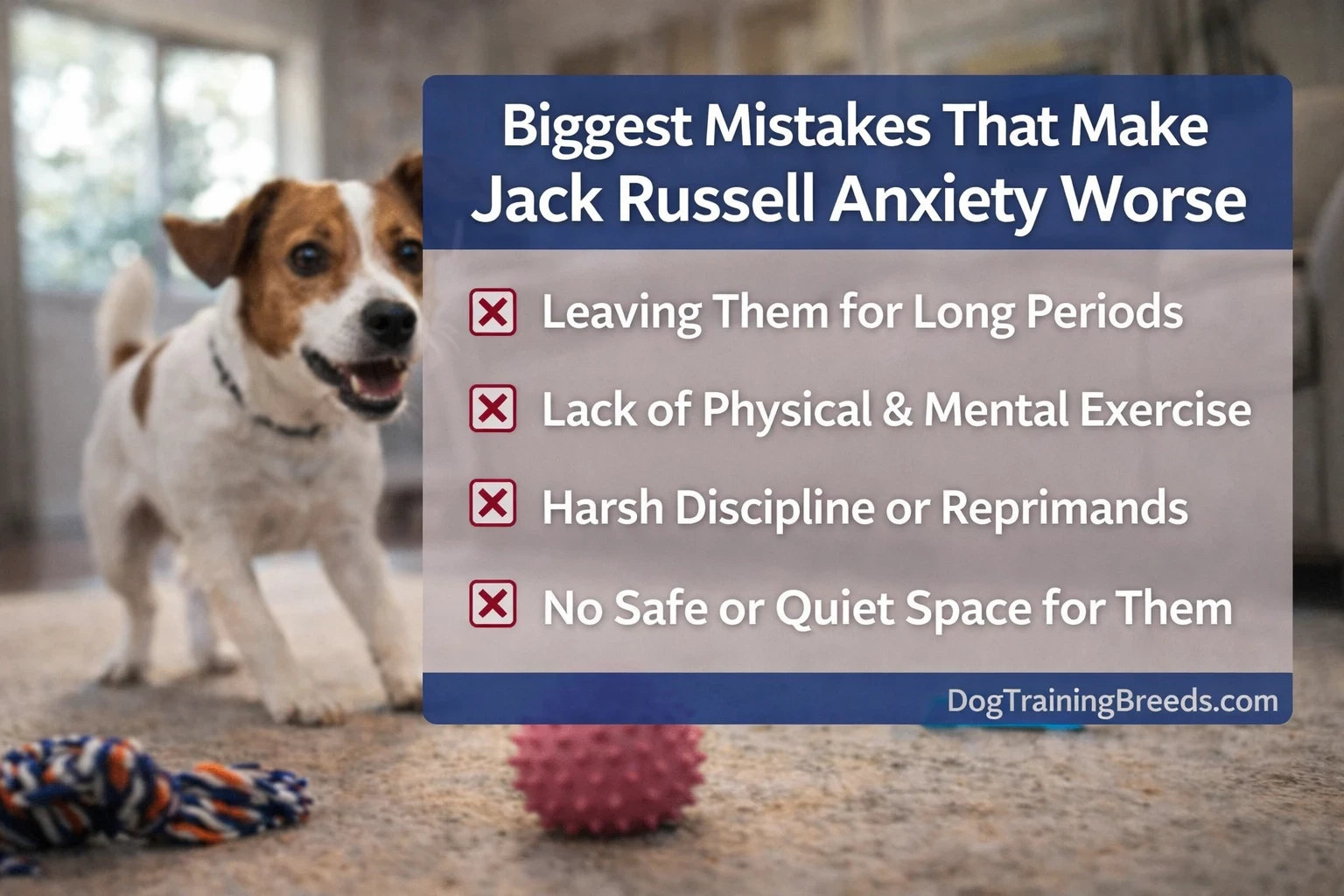
Some common missteps can unintentionally ramp up the stress level for anxious rescue dogs. Knowing what to avoid really helps.
Too much freedom too soon
It’s tempting to give your new pup full run of the house, but Jack Russells actually find too much space overwhelming. All those choices, like where to sleep, when to bark, and what to do, leave them even more wired. Gradual, guided access with lots of structure is less stressful.
Inconsistent routines
Dogs thrive on predictability. Shifting wakeup times, meal schedules, or inconsistent rules make life feel even more unstable. Anxious Jack Russells will keep testing boundaries if they’re never completely clear.
Trying to tire them out without structure
Endless fetch or wild play might seem helpful, but unstructured energy burns can create a more frantic brain. High quality, structured outlets teach calm and focus, not just zooming around until they collapse. A lot of this comes down to small training mistakes that unintentionally make behavior worse over time.
Reacting emotionally instead of leading calmly
If you’re constantly anxious, frustrated, or apologizing for your dog’s behavior, your Jack Russell will read your tension. Calm leadership is soothing. Escalating emotions make anxiety stick around longer.
👉 Most owners don’t realize they’re making these mistakes until someone shows them a better system. Having a structured plan to follow can completely change your dog’s behavior.
How to Calm an Anxious Rescue Jack Russell Terrier (Step-by-Step)
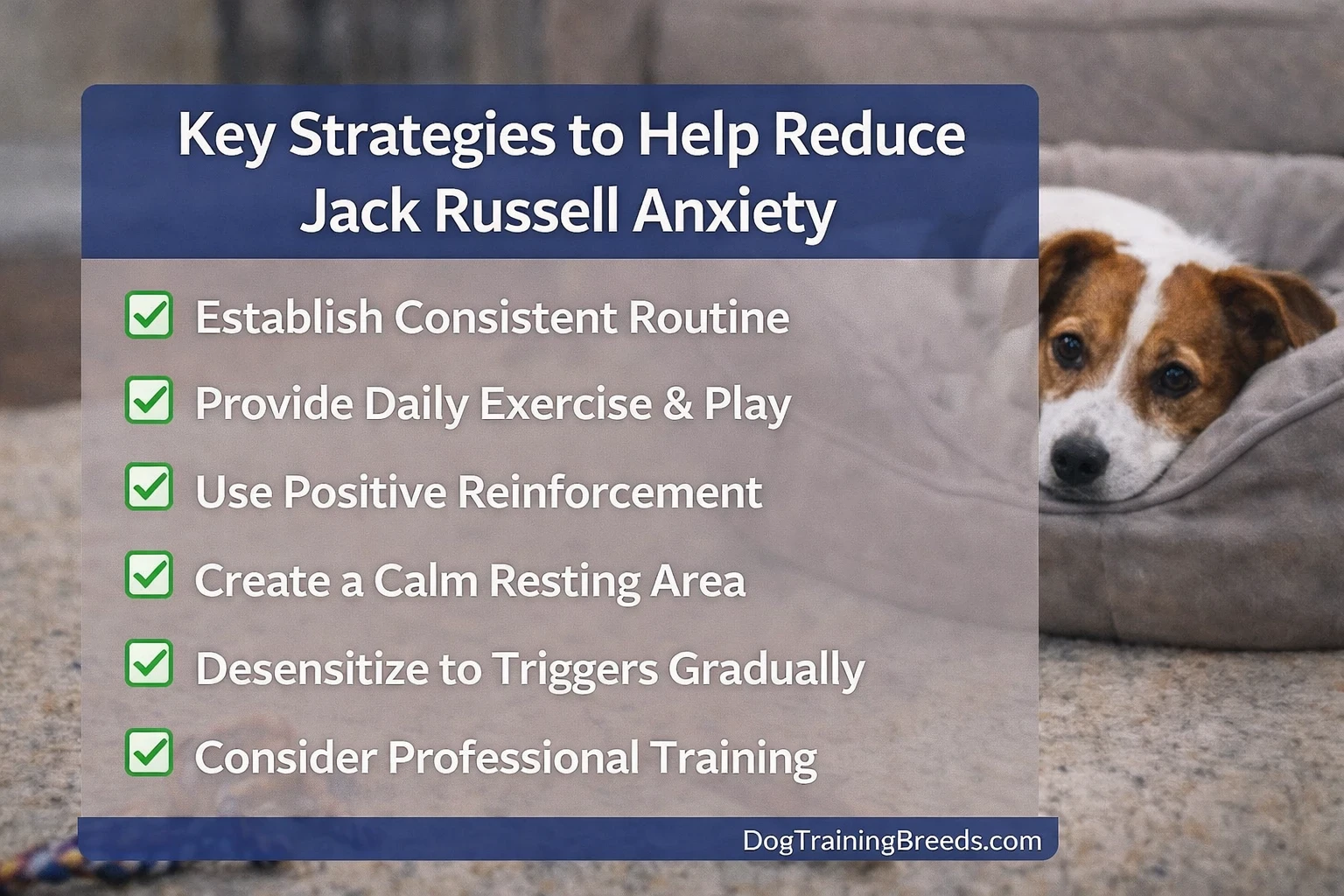
Relief is possible with the right approach. Here’s what’s worked for me and so many other rescue Jack Russell owners:
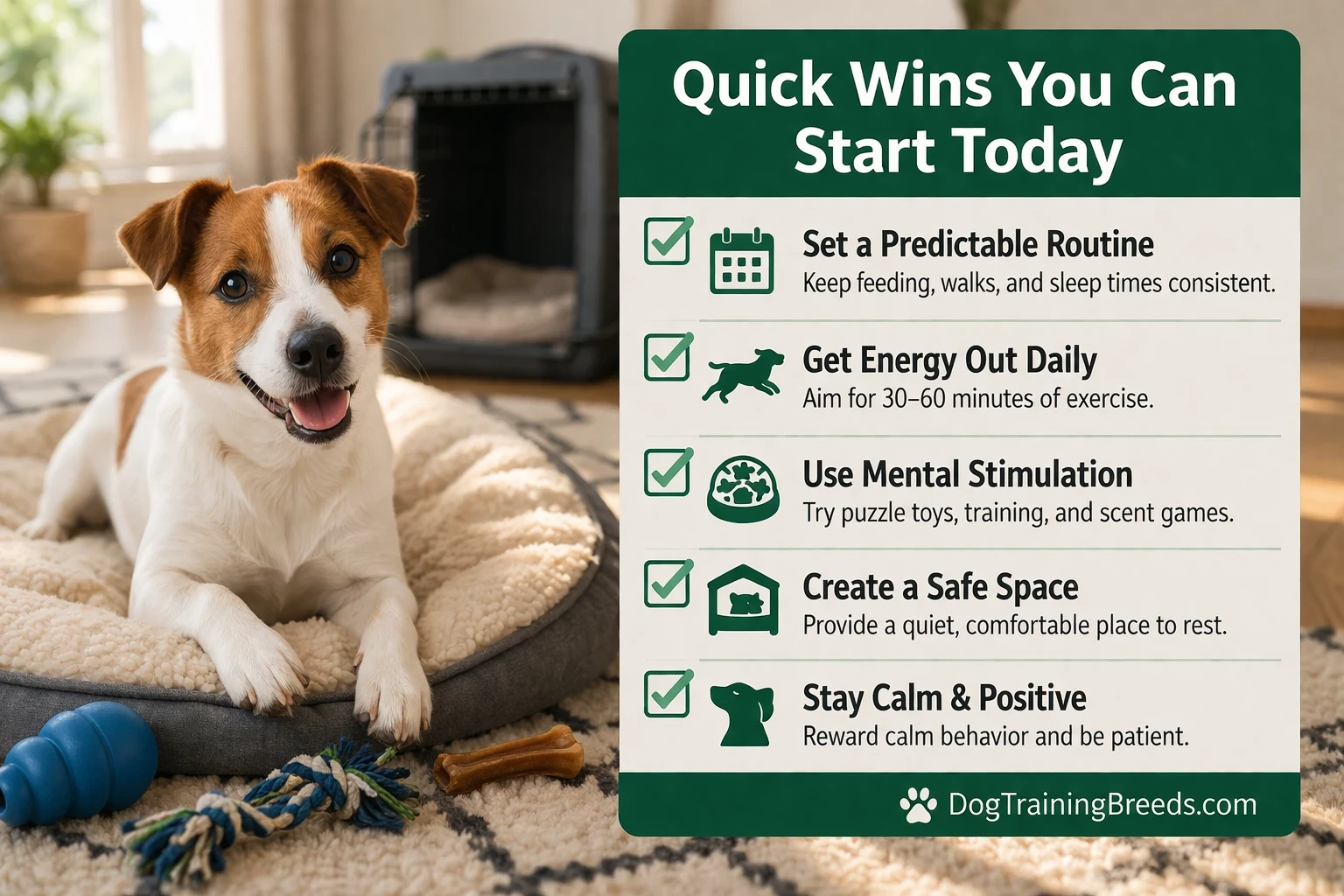
Step 1: Create a predictable daily routine
Regular walk times, food times, bathroom breaks, and structured downtime teach your dog what to expect. Routines build trust and a sense of safety—a super important thing for rescue dogs.
Step 2: Use structured exercise (not just random play)
Swap endless fetch for activities like sniff walks, puzzle feeders, and trick training. These focus your Jack Russell’s energy while working their brain. Tiring out a terrier with intention leads to a calmer dog afterward.
Incorporating mental challenges, such as scent work or interactive toys, helps give your dog a sense of accomplishment and encourages problem solving, which reduces anxiety.
👉 If you want a step-by-step system that walks you through exactly how to build calm behavior (instead of guessing), this training program breaks it down in a really practical way.
Step 3: Teach calm behavior (include “place” command / resting)
Reward calmness by teaching your dog to settle in a specific spot (“place”), reinforcing quiet behavior, and giving lots of attention when they’re mellow, not just when they’re buzzing around. Calm gets good stuff. Chaos gets ignored or redirected. In addition, try short sessions with your dog on a mat or bed with a chew toy or stuffed Kong, which helps them associate rest with positive experiences.
👉 If you want a step-by-step system that walks you through exactly how to build calm behavior (instead of guessing), this training program breaks it down in a really practical way.
Step 4: Manage their environment
Crates, playpens, or blocked off rooms prevent overstimulation and give your dog a safe place to retreat. Limit freedom until your Jack Russell proves they can handle more space calmly.
Also, consider using white noise machines or calming music to create a peaceful atmosphere, which can help ease anxious feelings triggered by outside stimuli.
Step 5: Build confidence through training
Work on simple commands, nose work, or agility basics—not for perfection, but to give your dog small wins and a sense of control. Confidence grows from success, not correction. Use treats and praise to reinforce accomplishments, and regularly introduce new but manageable challenges.
If your dog has a rescue background, the approach matters even more—some methods can actually increase anxiety instead of reducing it. For more help, read my comprehensive guide, how to train a rescue dog with behavioral issues.
Other Tips to Give Your Rescue Jack Russell a Boost
Understanding how rescue dogs process the world differently can completely change how you approach their behavior. I write about it in depth in my post, rescue dog behavior issues explained. Consider enrichment that taps into your dog’s natural instincts, such as hide-and-seek games with treats, digging boxes, or supervised access to safe tunnels.
Engage with safe social opportunities, such as slow introductions to new people and dogs, and allow your dog to observe unfamiliar situations from a distance if they seem wary. Track down durable chew toys to redirect their focus and soothe nervous energy.
Sometimes all it takes is a simple change to your routine. Try shorter outings to calm busy minds, offer extra potty breaks to prevent stress accidents, or give your dog a cozy den (like a covered crate) for hiding out on noisy days.
Be patient and keep a notebook of your dog’s small improvements. They might not have a perfect day right away, but even tiny victories show meaningful progress.
When to Be Concerned About Severe Anxiety
Some levels of anxiety can improve a lot with the right tools. Other signs call for extra support from professionals.
Signs of true separation anxiety
Watch for major distress every time you leave: howling, drooling, destroying things, or even self-injury. This is more than just a little boredom and usually needs behaviorist input.
When anxiety turns into reactivity or aggression
If your dog’s nervousness tips into growling, snapping, or biting (even at objects or other pets), it’s time for expert help. The stakes get higher, and you want the right tools on board.
When to consider professional help
If you’re doing all the right things and not seeing improvement, or if the anxiety feels too big to handle alone, reach out to a force free trainer or vet behaviorist. There’s zero shame in getting help; it just means you care about your dog’s future.
Final Thoughts: Your Jack Russell Isn’t Broken
Having an anxious rescue Jack Russell Terrier can feel like a lot, but it’s not a sign you’ve failed, or that your dog can never feel calm. So much of this comes down to a mix of breed traits, past life experiences, and adjustments to a new world.
The flip side is that predictability, calm routines, and patient leadership can make a massive difference.
👉 If your Jack Russell’s anxiety is making daily life stressful, don’t wait for it to get worse. You can start turning things around with the right structure and guidance .