
Seeing your new rescue dog struggle can feel overwhelming. I’ve been there too—wondering if I was doing something wrong or if something was just “off.” When you’re dealing with barking, fear, or behavior that looks like stubbornness, it’s easy to start second-guessing yourself.
The truth is, most people go through this with a rescue dog. You’re not alone—and your dog isn’t broken.
Just a quick heads-up for transparency: this article may contain affiliate links. If you choose to buy through one of them, I may earn a small commission at no extra cost to you. It helps support DogTrainingBreeds.com so I can keep creating helpful resources for dog owners like you.
In this guide, I’ll walk you through what’s actually normal for rescue dogs, why these behavior issues show up, and exactly what you can do to help your dog feel safe, settle in, and start improving.
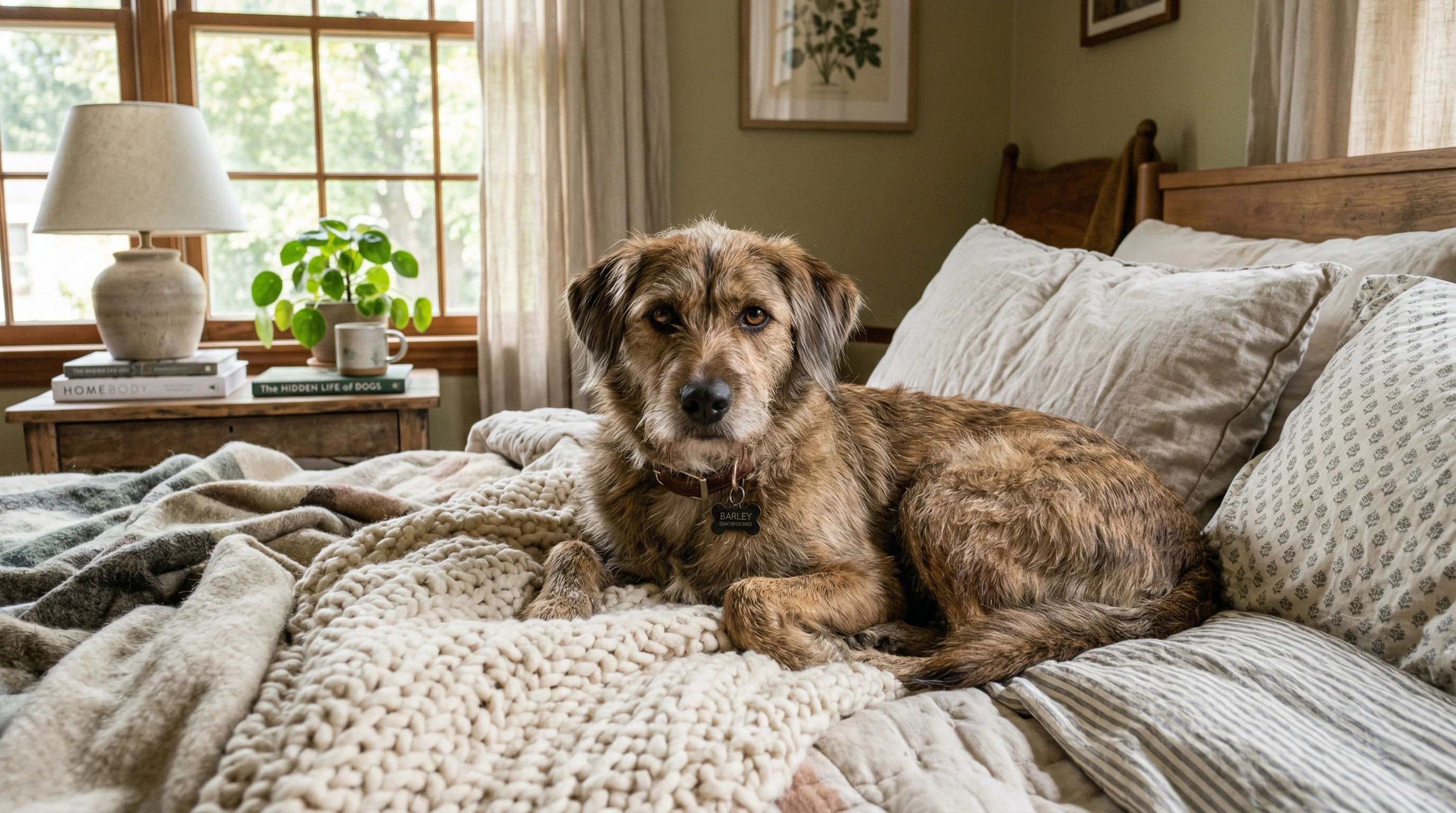
Why Rescue Dog Behavior Issues Are So Common
Rescue dogs come with their own stories, even if you don’t know what they’ve been through. Change can be scary for anyone, but it’s a little more intense when you’re a dog trying to figure things out in a totally new place.
The Hidden Past You Don’t See
Many rescue dogs have missing or unclear backgrounds. Some have been surrendered, bounced between homes, or lived on the street. Even if nothing big happened, moving from one environment to another over and over can throw their whole world off balance. This shows up as odd behavior, like hiding, nipping, pacing, or being scared of everyday things.
Stress, Fear, and Survival Mode

When dogs feel uncertain or threatened, their brains switch to survival mode. That may look like growling or barking. Still, it usually comes from stress or fear rather than aggression. Old habits, like guarding food or cowering when someone moves fast, are survival tactics, not character flaws.
The 3-3-3 Rule (Why Behavior Changes Over Time)
A rescue dog’s adjustment looks different at each stage.
The 3-3-3 rule sums it up:
- 3 days to decompress
- 3 weeks to start settling
- 3 months to fully open up.
It’s normal to see big mood shifts, especially as they test boundaries or start trusting you more. Learning to recognize changes in behavior over time gives you clues about your dog’s comfort level. Celebrate even small signs of progress, like coming out of hiding or wagging their tail.
Most Common Rescue Dog Behavior Issues (And What They Mean)
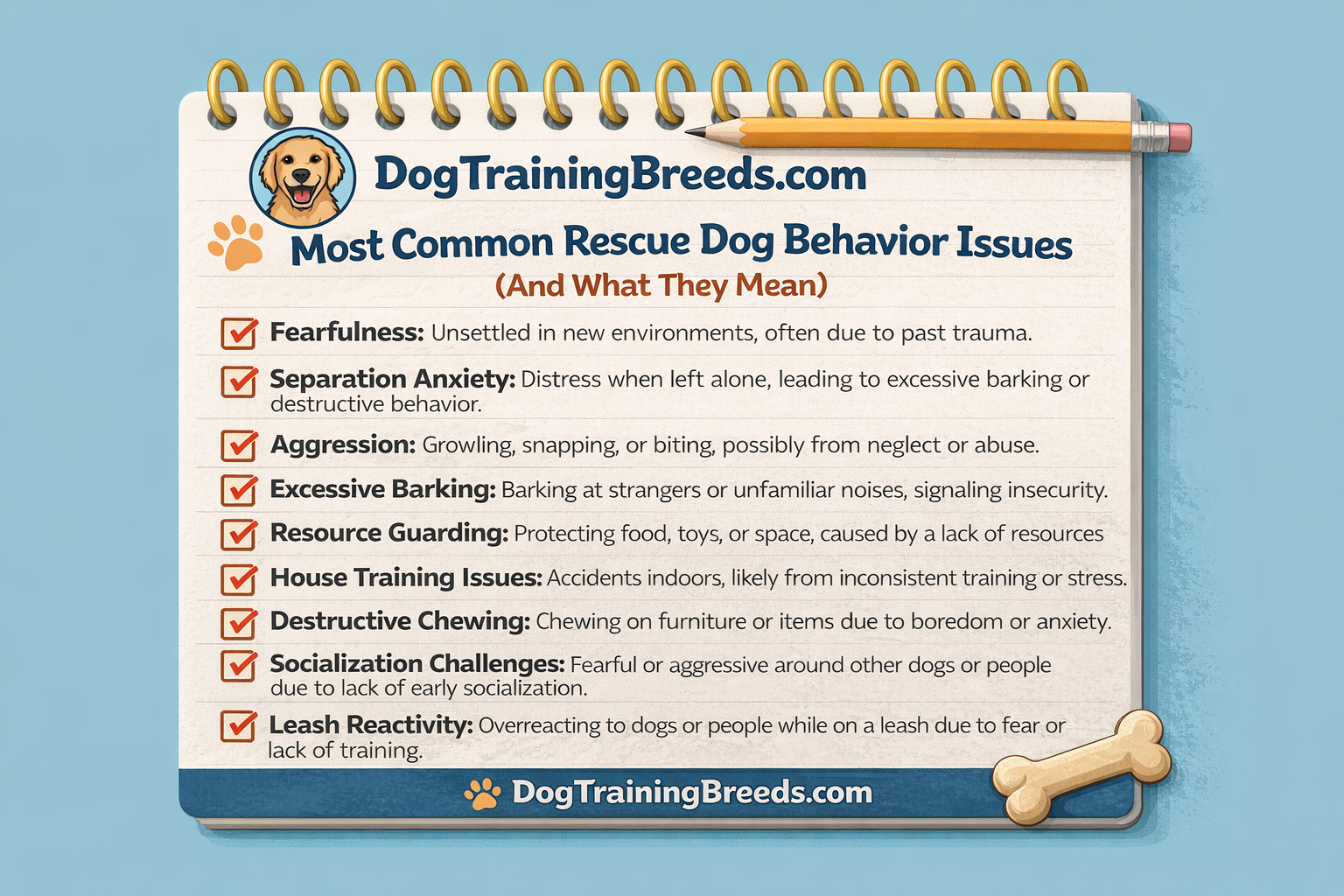
Aggression (Growling, Snapping, Biting)
Growling isn’t always a warning sign of a “bad” dog. It can be your dog’s way to say, “I’m scared,” or, “I need space.” Snapping or biting is more serious but often linked to being startled or pushed beyond their comfort zone.
Some dogs use these signals as a last resort to protect themselves when they feel cornered, so it’s crucial to pay attention to what sets them off. If your dog’s behavior feels more intense or unpredictable, you can read more here: Method K9 Dog Training Review: Does It Work for Aggressive Dogs?
Fear and Anxiety (Hiding, Shaking, Avoidance)
Some rescue dogs spend days or even weeks hiding behind furniture or trembling at new sounds. My Jill did. It was heartbreaking because I knew she was terrified. I didn’t know why.
Avoiding people might mean they just don’t trust humans yet or have never lived in a home. You might also spot subtle signs, like panting when nothing is happening, not eating, or pacing around the house. These all point to underlying stress or worry about new situations.
Excessive Barking or Reactivity
Barking at the window, lunging at other dogs, or reacting to every movement isn’t uncommon. It usually comes from being overwhelmed or unsure, especially if your dog hasn’t had positive social experiences so far. Often, reactivity decreases as your dog feels safer but may spike when new situations pop up.
If your dog is barking at things you can’t even see, you might find this helpful: How to Stop My Dog Barking at Nothing.
Separation Anxiety and Destructive Behavior

Chewing pillows, scratching doors, or nonstop barking when left alone can signal separation anxiety. It’s often a rescue dog’s biggest challenge, because they may not have had a steady home before you.
Trying puzzles and chew toys or leaving soft music on when you leave may ease their stress. Sometimes, professional help is needed if things spiral.
Not Listening or “Stubborn” Behavior
Ignoring commands or acting “deaf” confuses lots of new owners. Most of the time, the dog doesn’t really know what’s being asked or is too stressed to pay attention.
Consistency, patience, and simple, single-word cues are much more effective than raising your voice. Also remember, sniffing the ground or looking away isn’t stubbornness—it’s often just their way to cope.
If your dog seems like they’re “not listening,” it usually means they’re overwhelmed or unsure what you’re asking. A structured program like TrainPetDog can help break things down in a way that actually makes sense to your dog.
If your dog pulls on walks or ignores commands outside, this guide can help: How to Stop My Strong Dog from Pulling on the Leash.
What Your Rescue Dog Is Trying to Tell You
Understanding what’s behind their behavior helps you help them. Dogs rely on body language and small signals way more than words. Paying attention to non-verbal cues can help you step in and prevent meltdowns. The more you watch and listen, the better you’ll get at picking up what your dog needs in different moments.
Body Language Signals You Should Never Ignore
There’s a lot you can pick up from ear positions, tail movement, and their overall posture. Things like wide eyes, freezing in place, yawning, lip licking, or the classic tucked tail all show discomfort or worry.
Catching these signals lets you change things up before it escalates to a growl or nip. Over time, your understanding deepens, and you’ll act more quickly and confidently to give your dog comfort or space before things get intense.
Why Punishment Makes Rescue Dogs Worse
Punishing fear-based behavior works against you. Dogs don’t understand “right” or “wrong” in the human sense. If you yell or punish, a rescue dog gets more anxious, which only makes problem behaviors worse at home and outside. Instead, a calm approach paired with treats and praise steers your dog towards the behaviors you want to see.
Understanding Triggers vs “Bad Behavior”
Triggers are things that make your dog react, like loud noises, certain people, or other dogs. These aren’t signs of a “bad” dog. Your job is to spot and help manage these triggers, not force your dog to “face their fears” all at once.
Keeping a simple journal of what sets your dog off can help you spot patterns and prepare for future situations. Gradual exposure in a positive way often builds lasting confidence.
How to Fix Rescue Dog Behavior Issues (Step-by-Step)
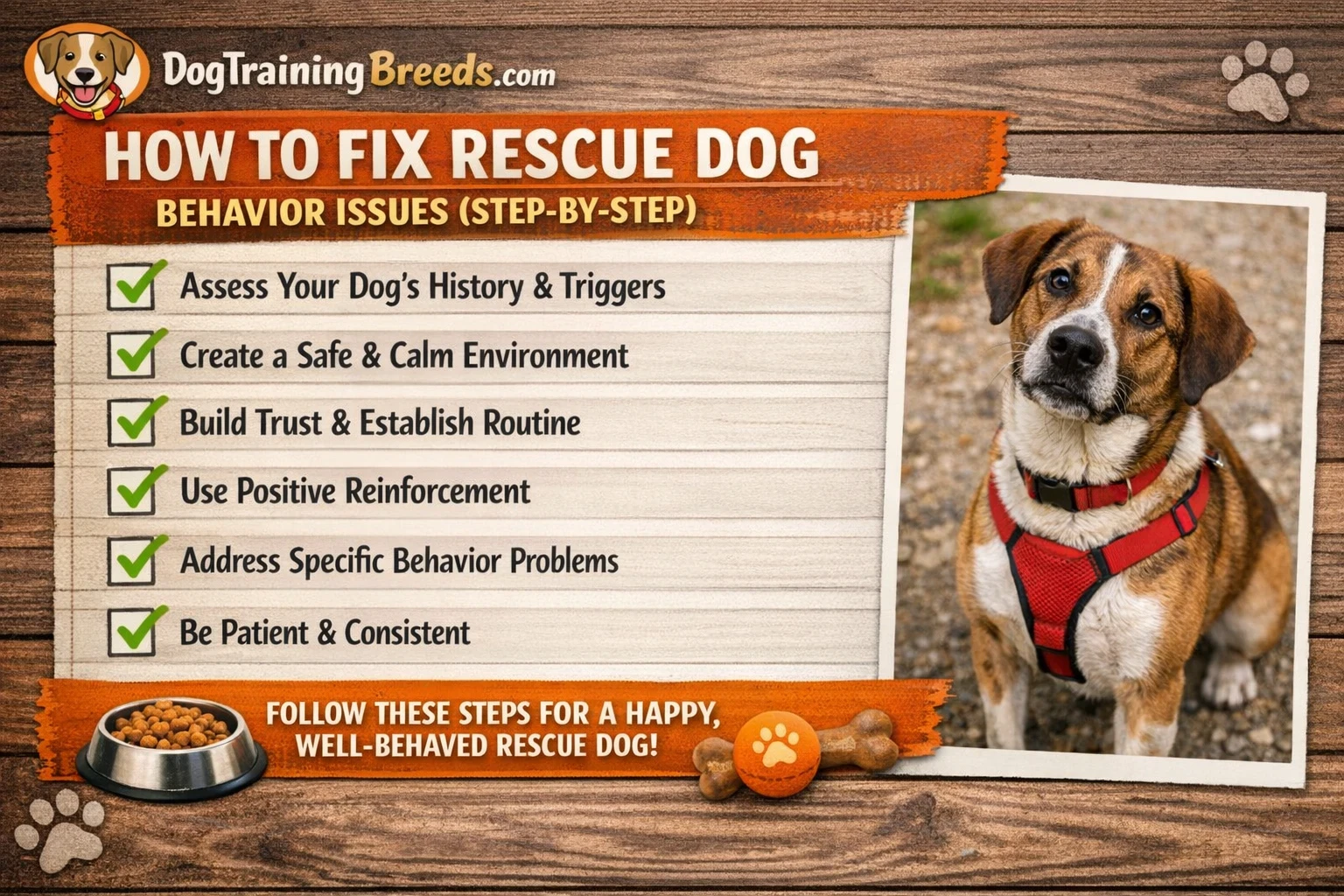
Taking things slow and zeroing in on trust first pays off. Here are some steps that I’ve seen really help:
Step 1: Build Trust Before Obedience
Everything starts with trust. Hang out together, hand out treats just for sharing space, and be gentle. Avoid forcing interactions or “testing” your dog’s limits too soon. Give your dog choices—if they want to retreat to a safe spot, let them. Solid trust lays the groundwork for all training that follows.
Step 2: Create a Safe, Predictable Environment
Make your place dogfriendly. Set up a comfy spot where your rescue can relax. Use routines and limits, like baby gates, so things feel predictable. The calm vibe really helps anxious dogs settle. Make sure they always have access to water and a quiet place. Familiar objects like a favorite blanket or stuffed toy can create security and comfort during periods of stress.
Step 3: Use Positive Reinforcement Only
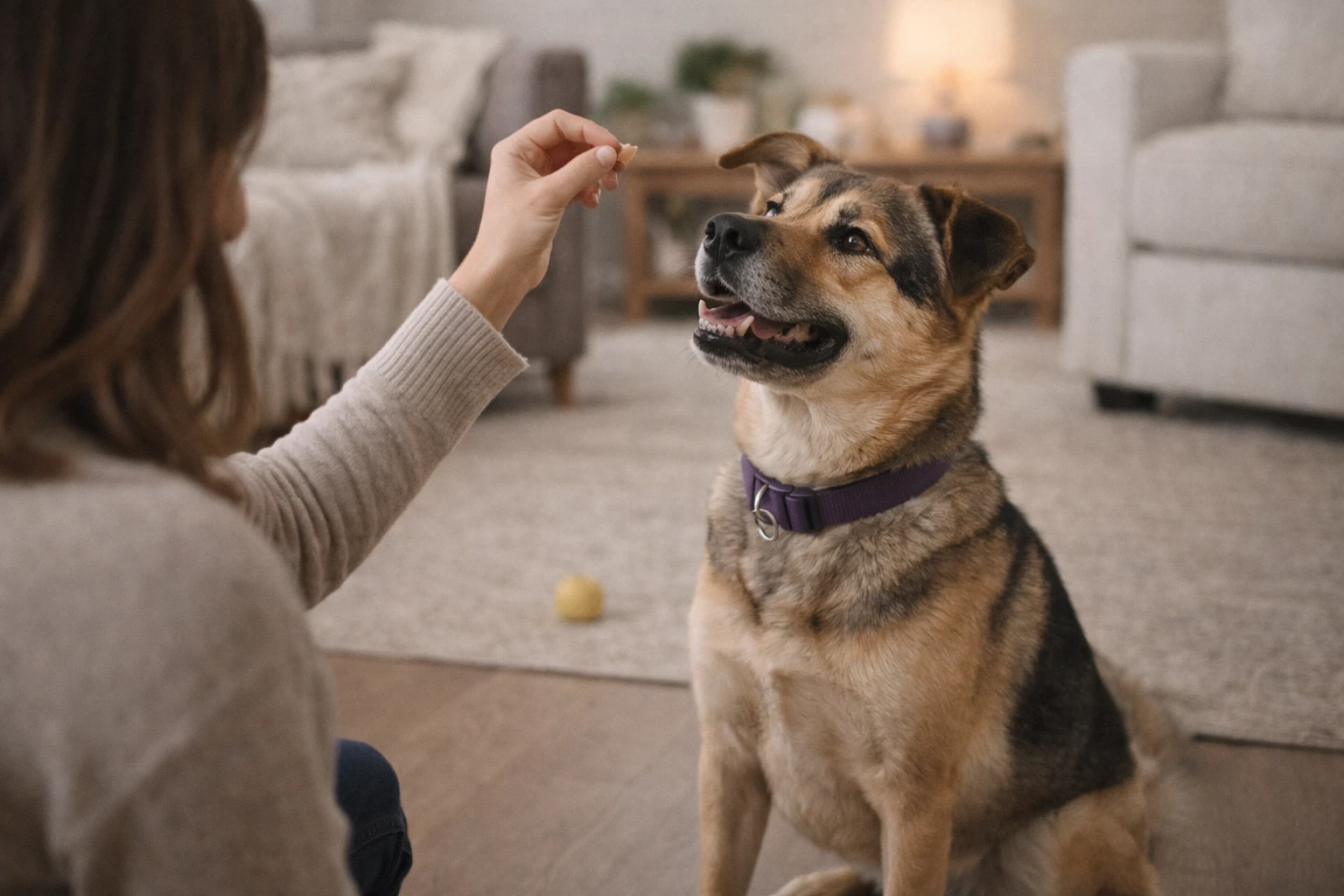
Reward the good stuff—anything you want to see more of, like sitting calmly or checking in with you. Treats, praise, and gentle encouragement work way better than corrections. If something isn’t working, try breaking tasks into smaller steps and celebrate every win along the way.
If you want a clear, step-by-step plan to follow, I highly recommend checking out TrainPetDog. It shows you exactly how to build trust and fix behavior issues without confusion.
Step 4: Manage Triggers (Don’t Flood Them)
Keep your dog away from things that freak them out, at least at first. Gradually build confidence with short, easy exposures at a distance. Never toss them straight into stressful situations.
You’re not avoiding problems.
You’re letting them learn at their own pace. Always praise calm behavior in the face of a slight challenge—even a brief look towards a scary object without barking deserves a reward.
Step 5: Be Consistent (This Is Where Most People Slip)
Dogs learn through repetition. Stick with your routines, commands, and rules so your rescue always knows what to expect from you. Consistency builds stability and trust over time. All household members should follow the same routines; a united front makes your dog’s world feel secure.
If you’re feeling unsure about what to do next or how to stay consistent, you can check out TrainPetDog. It gives you a simple system to follow so you’re not second-guessing yourself.
Biggest Mistakes That Make Rescue Dog Behavior Worse
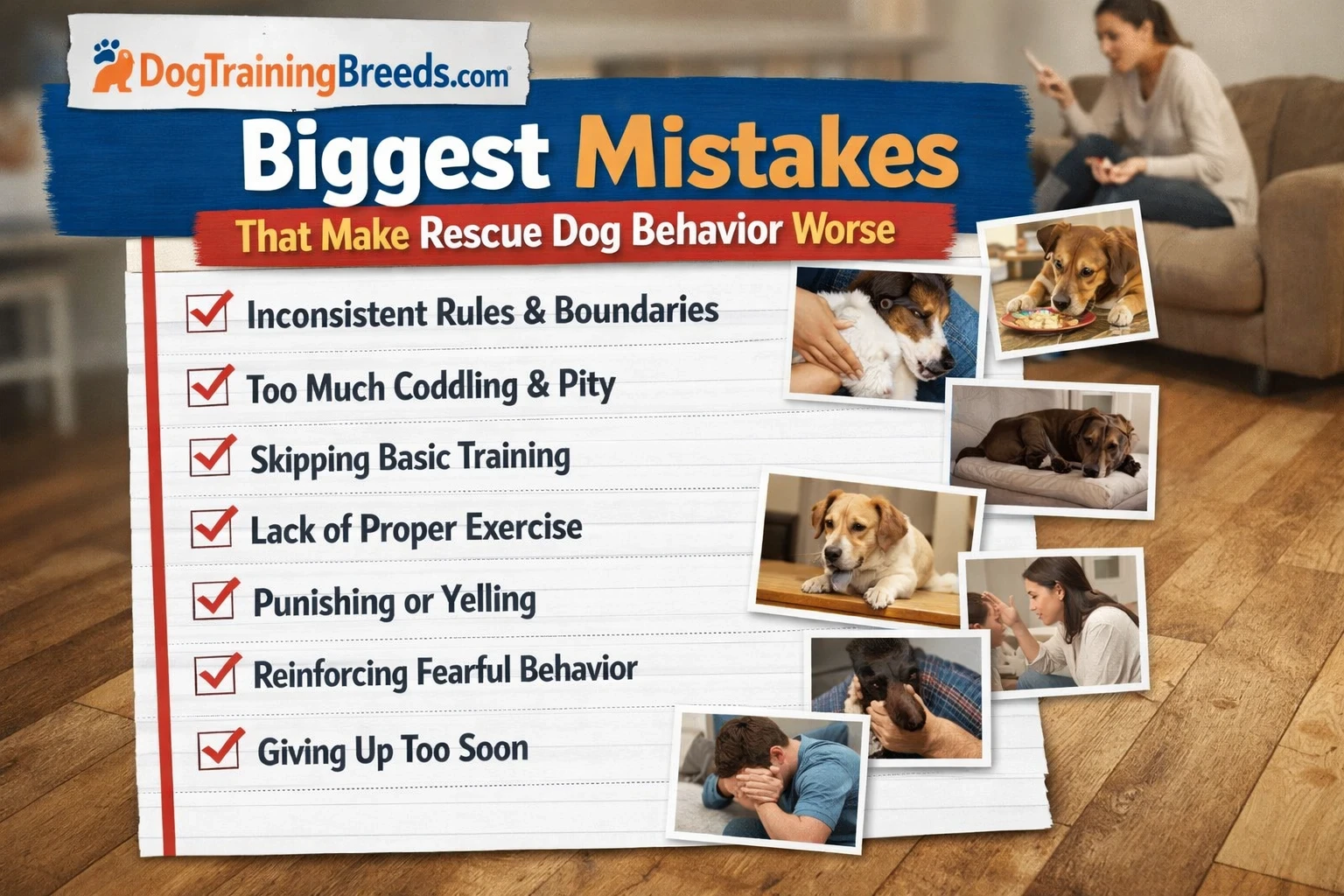
Plenty of folks unintentionally slow their dog’s progress or make things harder without realizing it. Here are some common stumbles:
Expecting Instant Results
Every dog moves at their own pace. Comparing your rescue’s timeline to another dog’s won’t help. Patience is super important here. Recognize that true change takes time and may follow an up-and-down pattern. A setback doesn’t mean failure—it’s just part of learning together.
Punishing Fear-Based Behavior
Trying to “correct” a scared dog often leads to even more fear or shut-down. It’s way more productive to address the fear than to punish the reaction. Give your dog chances to decompress when they’re overwhelmed instead of forcing them to interact or “behave.”
Inconsistent Rules
If today it’s okay for your dog to jump on the couch and tomorrow it’s not, they’ll get confused. Clear, steady boundaries help dogs relax and trust their people. Use cues the same way every time so your dog learns what you mean. Consistency cuts down confusion and anxiety.
Doing Too Much Too Soon
Flooding a rescue dog with too many new people, places, or experiences can overwhelm them. Take things one small step at a time. Instead of inviting a bunch of guests right away, give your dog a week or more to settle before adding new experiences. Watch for body language that signals stress and slow down as needed.
When to Get Professional Help
Sometimes, it’s a good idea to bring in a pro. There’s no shame in getting outside support if things feel out of hand or stressful for your family. Early intervention can prevent bigger issues down the road, so don’t wait if you feel stuck or your dog’s behavior seems dangerous.
Signs of Serious Aggression
Repeated growling, lunging, snapping, or any bite (even if minor) should get checked out by a certified dog behaviorist. Safety matters for everyone involved; dogs and humans alike. It’s better to act early than wait for a major incident.
When Safety Becomes a Concern
If there’s a real risk of someone getting hurt or your dog is showing extreme distress, like self-harm, constant panic, or destructive behavior, don’t wait. Professionals can create custom plans and teach you safer handling techniques. They’ll also help you make the living environment less stressful for everyone.
What a Good Trainer Should Focus On
Look for trainers who use force-free, positive reinforcement methods. The right trainer acts as a coach for both dogs and people, guiding you through calm, practical steps that build confidence and connection. Avoid trainers who use harsh corrections or claim quick fixes; steady progress comes from understanding and compassion, not force.
Can Rescue Dog Behavior Issues Really Be Fixed?
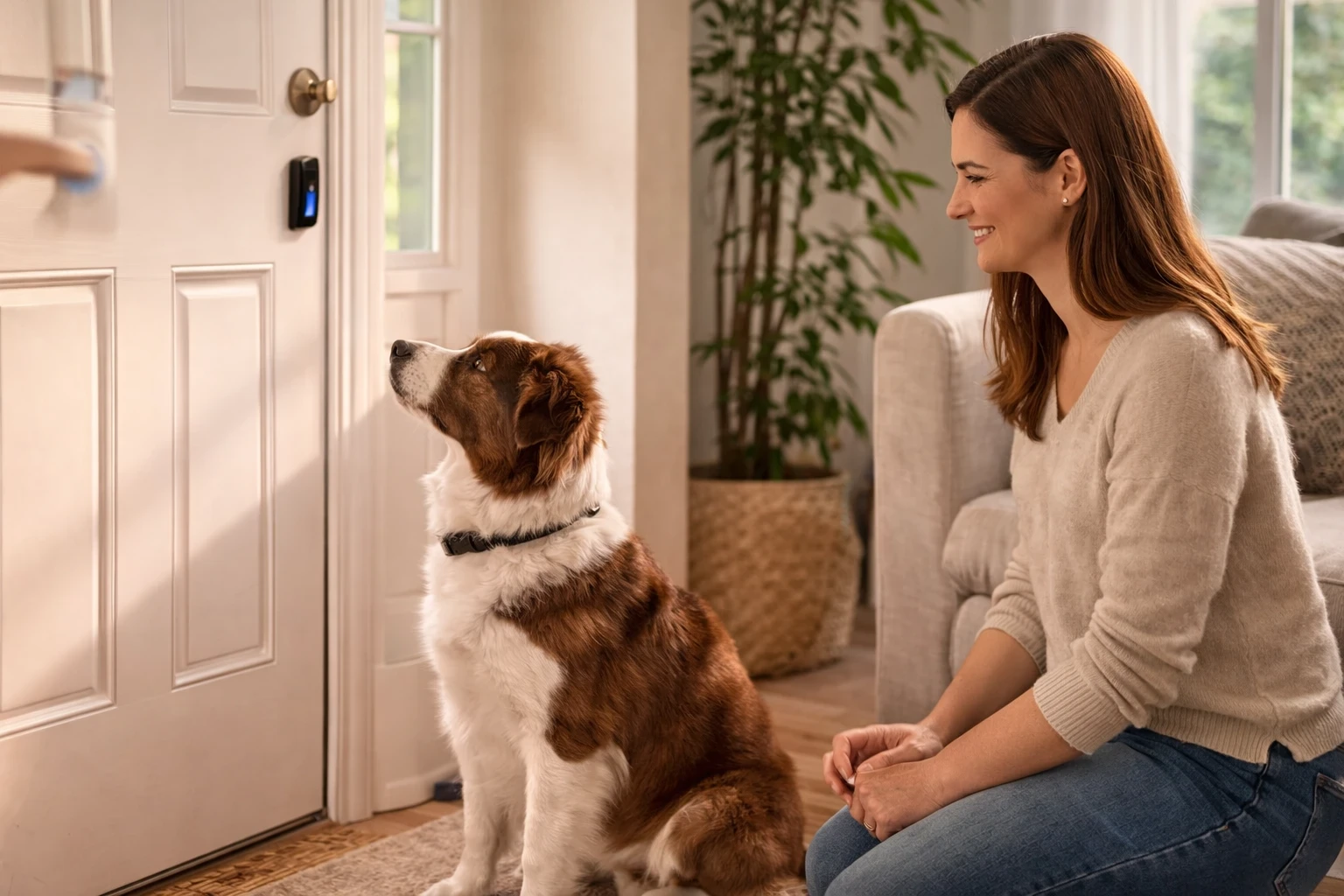
Progress looks different for every rescue dog. Some make fast leaps forward, others move in slow, quiet steps. Improvement almost always happens with time and the right approach. Patience, empathy, and a willingness to adjust your game plan are vital for long-term success.
What “Progress” Actually Looks Like
Sometimes, it’s not about curing every issue—it’s about fewer meltdowns, more calm moments, or a new ability to go for walks without drama. Progress can be quiet and steady rather than dramatic.
Even simple routines, like calmly sitting by your feet, signal that things are moving in the right direction. Track small victories on a calendar or notebook to see just how far your rescue has come over time.
Realistic Expectations (This Builds Trust)
Set goals, but keep them attainable. Celebrate little wins, like approaching a new person without hiding or learning to relax in a new room. Lower stress for both you and your pup goes a long way. Remember, not all dogs will ever love every situation—and that’s totally okay.
Why Most Dogs Improve With the Right Approach
Kindness, patience, and understanding fuel change. You’re not fixing a “broken” animal; you’re giving them a stable home to recover and thrive in. Most rescue dogs blossom when their people show steady support and keep working with them over time. Keep learning, stay flexible, and your rescue will likely reward you with love and lasting companionship.
Final Thoughts: You Didn’t Make a Mistake
If you’re overwhelmed, worried, or even questioning your decision, that’s normal. Rescue dog life can be messy. Just know that you’re doing something really meaningful, and you’re not alone in the struggle.
Every little bit of effort, patience, and kindness pays off. Stay consistent, reach out for help when you need it, and give yourself—and your dog—plenty of grace along the way. Want more step-by-step training tips?
If you’re ready to start seeing real progress with your rescue dog, check out TrainPetDog. It gives you a clear, step-by-step system so you always know what to do next.
Or continue reading:
- How to Stop My Dog Barking at Nothing
- How to Stop Leash Reactivity
- How to Stop My Strong Dog from Pulling on the Leash