
How to stop my German Shepherd from being leash reactive is one of the most common (and frustrating) questions owners ask when their calm dog suddenly turns into a barking, lunging mess the moment the leash goes on.
If that sounds familiar, you’re not alone—German Shepherds are incredibly intelligent and alert, which can make them more reactive on walks when they feel overstimulated or unsure.
The good news is that with the right approach and a bit of consistency, most German Shepherds can learn to stay calm, focused, and actually enjoy their walks again.
Quick Transparency Note:
Some links on DogTrainingBreeds.com are affiliate links. This means if you choose to purchase through them, I may earn a small commission—at no additional cost to you. I only recommend training programs and resources I genuinely believe can help improve your dog’s behavior and your overall experience as an owner.
What Leash Reactivity Looks Like in German Shepherds
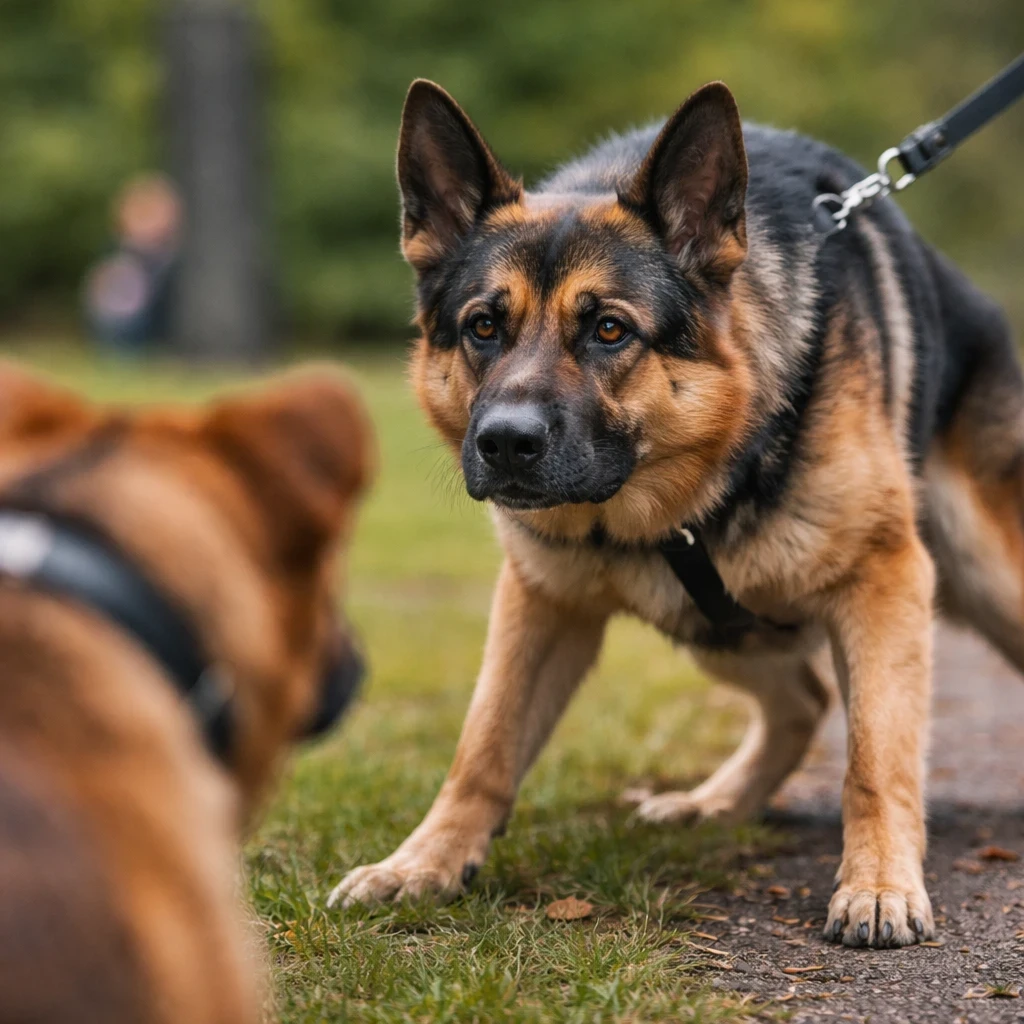
German Shepherds are known for their big personalities and high drive. When leash reactivity kicks in, their reactions can look pretty dramatic. Here’s how to spot the most common signs.
Barking, Lunging, and Overreaction Explained
A leashreactive Shepherd might start by staring hard at another dog or person, then stiffen up, bark, or even lunge at the end of the leash.
You’ll probably notice that it’s much worse when you’re close to the trigger, whether that’s another dog, a cyclist, or just interesting smells.
Sometimes, the reactivity catches people off guard because their dog is friendly off leash but turns wild when tethered. It’s stressful and, with a big breed, even embarrassing.
Reactivity vs Aggression (Important Difference)
Reactivity isn’t the same thing as aggression. Reactivity comes from frustration, excitement, or nervousness, like your dog’s feelings are just too big to handle. Aggression is about a true intent to harm. Most leashreactive Shepherds don’t want to fight; they just want space or are frustrated they can’t run up and say hi. Knowing this helps you approach training with a lot more confidence.
Why German Shepherds Become Leash Reactive
High Alertness and Protective Instincts
German Shepherds are bred as guard dogs, so being on high alert comes naturally. On a walk, these instincts can kick in, especially if your dog spots something unfamiliar. The leash keeps them close by your side, which can make them feel like they have to handle any “threat” themselves.
Lack of Early Socialization
Shepherds who weren’t exposed to lots of dogs, people, and noises while young can be overwhelmed by new sights and sounds. When something feels strange or unpredictable, barking and lunging are how they deal with it.
Frustration From Leash Restriction
Many German Shepherds simply hate being held back. On the leash, they can’t explore or greet others the way they want. This frustration can pile up until it bursts out as reactivity.
Owner Tension (Yes, It Matters)
This one is sneaky. Dogs read body language better than we do, so when you tense up at the sight of another dog, your Shepherd feels it. Even a tight grip on the leash or holding your breath can signal to your dog that something is wrong, which boosts their stress even more.
The Biggest Mistakes Owners Make (That Make It Worse)
Pulling Back on the Leash
It’s a super common reaction: another dog appears, and you pull your Shepherd back. Unfortunately, this tight leash sends a message. Something’s up, time to freak out. It also ramps up frustration and makes your dog feel even less in control.
Letting the Dog “Push Through” Triggers
Some owners try to rush past triggers, thinking their dog will “get used to it.” But this can backfire, making reactivity worse every time your Shepherd is forced to get too close to something that sets them off.
Using Treats at the Wrong Time
Lots of trainers recommend treats, but timing is everything. If you reward your dog while they’re barking or lunging, they’ll think this is what you want. Treats only work when your Shepherd is calm or focused on you, not going nuts at the end of the leash.
Inconsistent Training
It’s easy to expect quick results, but German Shepherds need repetition and consistency. If some family members let bad habits slide, or training only happens once a week, progress slows down or stalls entirely.
This is where a lot of owners get stuck, because without a clear system in place, it’s way too easy to accidentally reinforce the unwanted behavior without even noticing.
This is where a lot of owners get stuck, because without a clear system in place, it’s way too easy to accidentally reinforce the unwanted behavior without even noticing.
That’s why following a step-by-step training program that shows you exactly what to do can make such a big difference instead of guessing your way through it.
Before jumping in, it helps to understand that the most successful owners aren’t just winging it—they’re following a proven system. That’s what makes the biggest difference in getting consistent results.
Step-by-Step: How to Stop Leash Reactivity
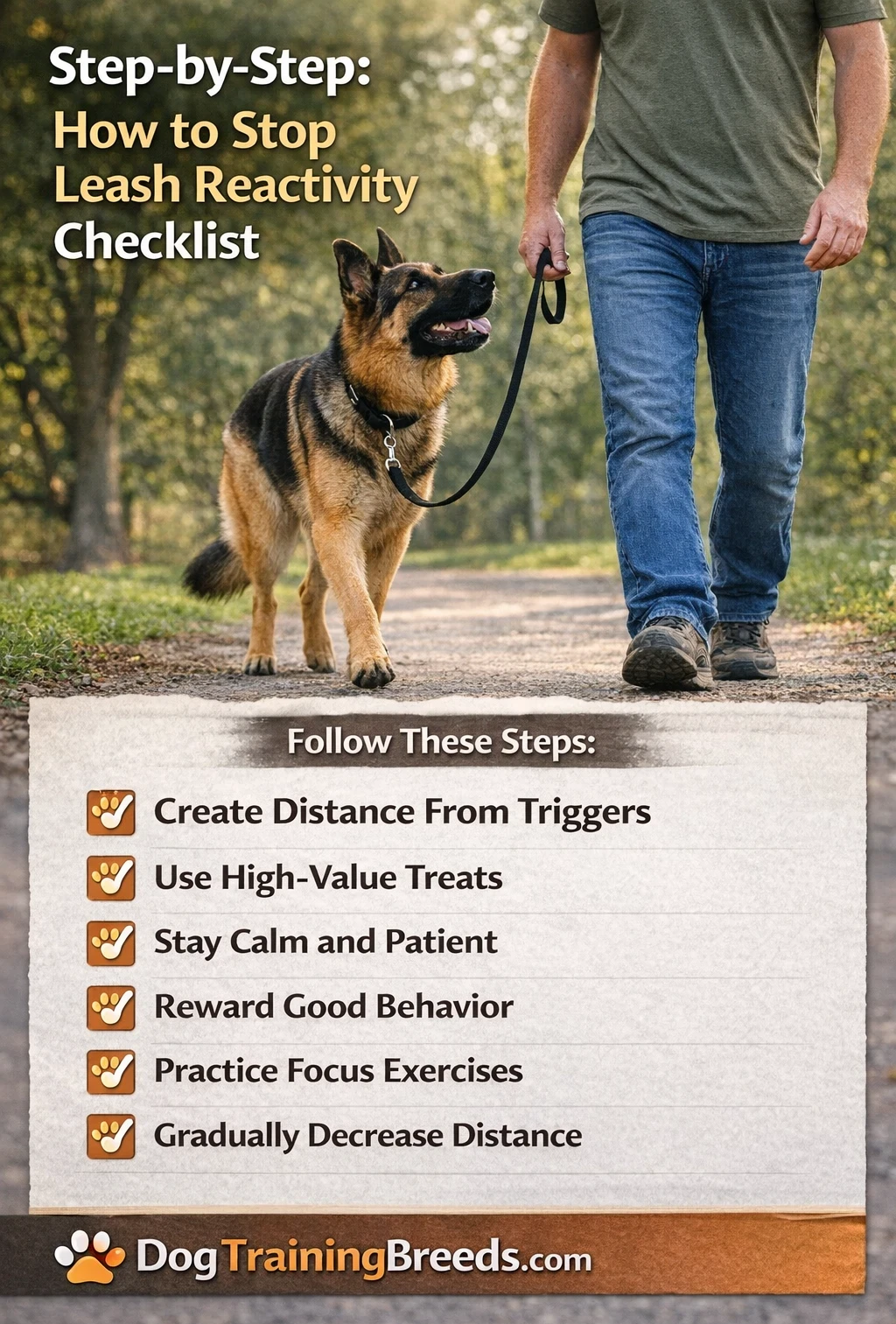
Step 1: Create Distance From Triggers
Your German Shepherd can only learn when they feel safe. Start training at a distance where they can see triggers without flipping out.
This could mean crossing the street, hanging back on a quiet path, or hanging out in your driveway during busy hours. You’re aiming for that sweet spot, where they notice the trigger but aren’t reacting yet.
Step 2: Build Focus and Engagement
Teaching your Shepherd to focus on you is super important. Try games like “Watch Me” or simple touch commands to help your dog pay attention, even with stuff happening around.
Bring high-value treats or a favorite toy, and reward them for eye contact, not for looking at the trigger.
Step 3: Reward Calm Behavior (Not Reactivity)
Treats or praise only show up when your dog is calm, keeping loose body language and a relaxed leash. Some dogs love a game of tug or even a quick “find it” treat scatter.
Find what your Shepherd loves and use it only during training walks. The goal is for your dog to think, “When I see another dog, good stuff happens if I chill out.”
Step 4: Gradual Exposure Training
Start at your starting distance, then slowly get closer to the trigger over a few days or weeks. Try moving in a zigzag or in circles, rather than straight towards something exciting or scary.
If your Shepherd reacts, back up until they calm down, then reward. Think of it as building tolerance in baby steps. No need to rush this process; the idea is to always be working just below their “freak out” level.
Step 5: Stay Consistent Every Walk
Making progress with a leashreactive Shepherd is all about repetition. Try to stick to routines, watch for triggers, and bring rewards on every outing. Make sure everyone in the family uses the same cues and training style. The more predictable you are, the quicker your dog will catch on.
How Long Does It Take to Fix Leash Reactivity?
What to Expect in the First 2 Weeks
The first two weeks usually show the biggest learning curve. You might see your German Shepherd calming down a bit sooner, or at least recovering more quickly after a reaction. This stage is the hardest, but also where you’ll spot “microwins,” like quicker eye contact or quieter passing of triggers.
Signs Your Dog Is Improving
Signs things are getting better include less lunging, softer barking, or your Shepherd turning to you when they see a trigger.
Some dogs even start to ignore other dogs on their own. Consistency means progress, and while it’s a process, it’s super rewarding to watch your dog get more confident on walks.
When You Need Extra Help (And What Actually Works)
Sometimes leash reactivity is intense, or you just feel stuck. Working with a professional trainer, especially one who knows German Shepherds, can make a big difference.
Look for trainers who use reward-based, balanced methods and who will involve you in every step of the process. Group classes with controlled setups are worth checking out, but private sessions offer more tailored advice.
Online step-by-step programs can be incredibly effective, especially if you want a clear plan to follow instead of guessing.
👉 Check out my full TrainPetDog review here
If you’ve tried managing this on your own and feel like nothing is sticking, you’re not doing anything wrong; you just might not have a structured system to follow. That’s exactly why I decided to test a stepbystep training program with my own dogs.
I break down everything in my full review here:
TrainPetDog Review: Does This Program Actually Work for Real Behavior Problems?
If your German Shepherd is reacting on every walk, this kind of structured training can make a huge difference much faster than trying random tips.
Inside, I walk through what worked, what didn’t, and whether it’s actually worth your time if you’re dealing with leash reactivity, barking, or that outofcontrol feeling on walks.
Why Structured Training Programs Work Better Than Random Tips
Programs that use a clear, structured process are really helpful for owners dealing with leash reactivity.
Instead of tossing different “quick fixes” at the problem, you’re following the same steps each time, which helps your dog understand the rules faster. That’s exactly why structured programs like this one tend to work better than random YouTube tips.
Good programs cover the basics, but also offer troubleshooting for tough spots and include coaching or checkins for accountability.
My Experience Using a Step-by-Step Program
Trying out a dedicated system made a noticeable difference with my own dogs. You can see exactly what I used here: TrainPetDog Review
Instead of hunting through videos for answers, everything was laid out in chunks, so I always knew the next step.
Progress wasn’t instant, but sticking with the plan meant fewer setbacks and a lot less stress on walks. Programs with a solid track record are worth considering if you want to save time, cut frustration, and see longlasting change.
Wrapping Up: You Can Absolutely Fix This
Leash reactivity isn’t forever. German Shepherds are super smart and they love a challenge, so they can learn what’s expected of them on walks. Patience, consistency, and the right tools go a long way.
Even a few positive changes can make walking your Shepherd fun again for both of you. Take the process step by step and celebrate small wins. You’ll be surprised at the progress you both can make.
And if you ever feel lost, remember there’s no shame in asking for extra help or checking out a proven training program. Your German Shepherd wants to learn, and with the right guidance, you’ll both get through it together.
And if you want a clear, step-by-step system instead of figuring this out on your own, you can check out exactly what I used here:
This is such a thorough and practical guide for handling leash reactivity in German Shepherds! I really appreciate how you emphasize starting at a safe distance and only moving closer as the dog remains calm. It’s easy to forget that our dogs can only learn effectively when they feel secure, and your step-by-step breakdown makes that very clear.
I also like the focus on rewarding calm behavior rather than reacting to triggers. Using high-value treats, favorite toys, or even games like “find it” to reinforce relaxed body language is such a smart approach. It shifts the dog’s mindset from seeing other dogs as scary or exciting, to associating calmness with positive outcomes. Gradual exposure and zigzag approaches are great tips that many owners overlook, especially when they’re eager to “fix” the problem quickly.
Consistency is another point that really resonates with me. Ensuring everyone in the family uses the same cues and rewards creates a predictable environment that dogs can understand and thrive in. Celebrating small wins, like eye contact or softer barking, keeps the process encouraging for both owner and dog.
I’ve found that combining structured programs like TrainPetDog with daily practice makes a huge difference compared to relying on random tips. The structured approach removes guesswork and helps both the dog and owner stay on track.
Overall, this article is a fantastic reminder that leash reactivity is not permanent—patience, repetition, and the right tools can transform walks from stressful to enjoyable. Your guide is practical, detailed, and empowering for any Shepherd owner tackling this challenge.
Hi Diva. Thanks for you comment. It means a lot to me. Yes, patience, repetition and the right tools will transform your walks from stress to enjoyment. I’m glad my post helped.