
Constant barking at what seems like nothing can push you and even your whole neighborhood to wit’s end. Maybe you’ve gotten side-eye from next door, jumped awake at the worst time, or felt totally helpless during another long barking spell.
I know for me, when my two Jack Russells would go bonkers barking at nothing, it drove me insane. I was always tempted to throw something in there direction to get them to stop.
When a dog barks at “nothing,” it eats at your peace of mind and can leave you mentally drained. The good news is you can turn things around with the right approach. I’m sharing clear steps that actually work, so you and your dog can finally enjoy the quiet again.
A quick note of transparency: This post may contain affiliate links. If you make a purchase through my links, I may earn a small commission at no extra cost to you—which helps support this site and my continued research into effective, breed-specific training methods. I only recommend resources I’ve personally tested and believe in.
Now, if you’re really desperate, and simply cannot wait to read through this post to get your dog to stop barking and driving you absolutely crazy, here is the ultimate guide to get your dog to stop barking.
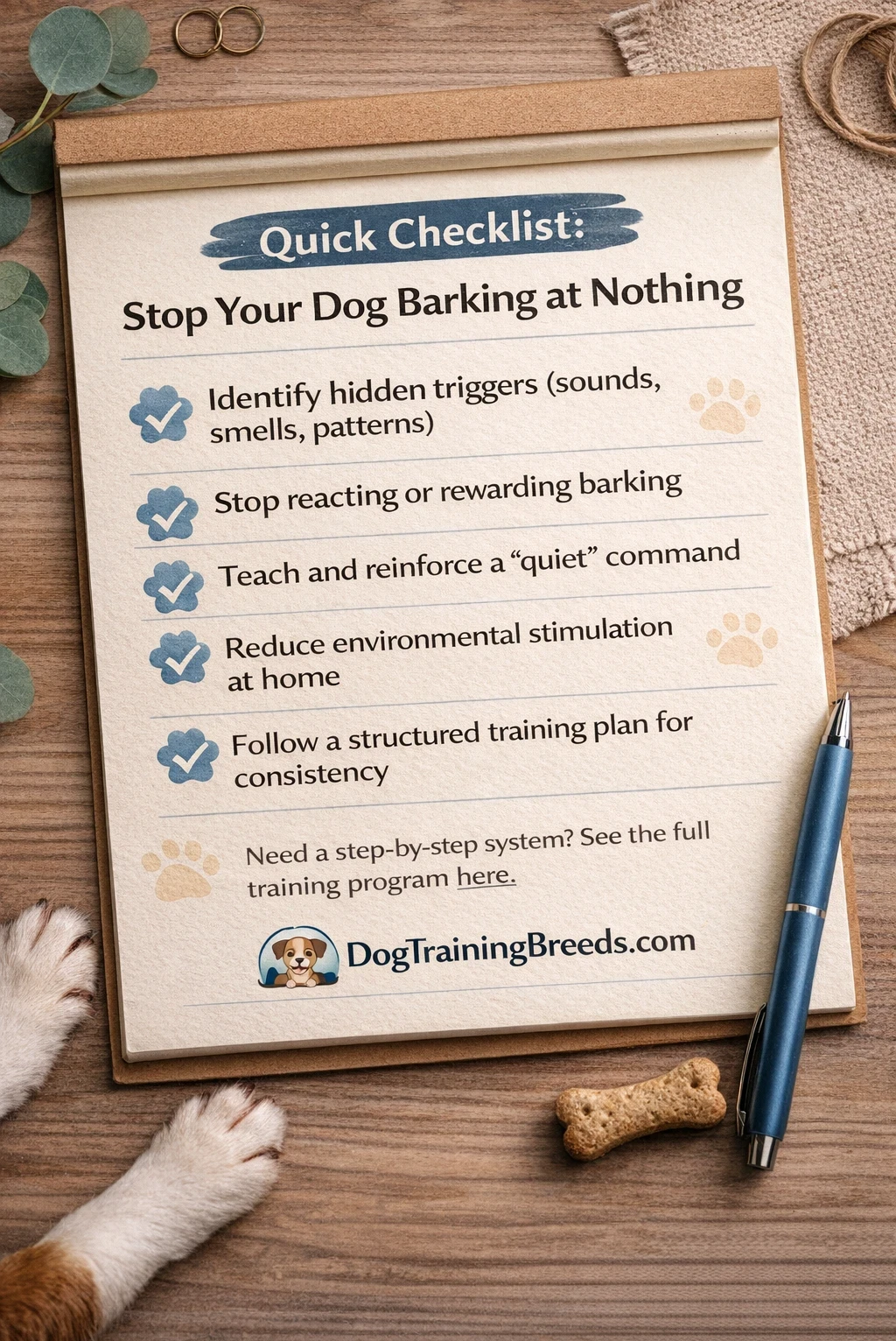
Step 1: Identify the Trigger (Even If You Can’t See It)
What looks like “barking at nothing” is pretty much never truly nothing. Dogs pick up on tiny noises and scents, way beyond our own range, so sometimes that empty hallway is full of smells or faint sounds.
Maybe it’s the hum of an appliance, shadows outside, or distant voices that you tuned out. Dogs are much more tuned into the world around them.
They can sense subtle vibrations, minute sound changes, and even changes in light or air pressure that just pass us by completely. These might seem trivial to us but can seem significant or even alarming to your pup.
If you haven’t already read why is my dog barking at invisible things, start there. That guide explains why dogs react to things you can’t detect, and how this awareness shapes their behavior.
Once you can spot possible triggers, you’ll have a much smoother time breaking the barking cycle. Spend a few days observing patterns — does it mostly occur at a certain time of day, or in a specific place? Even small details matter here.

Step 2: Stop Reinforcing the Barking
The moment most dogs start barking, we react. Sometimes it’s out of embarrassment — other times just to keep the peace. But raising your voice, rushing over, or giving them treats to calm them only teaches them that barking gets them a big reaction.
- Don’t shout. Dogs don’t get that you’re saying, “Stop!” Most will think you’re barking along.
- Ignore when safe. As long as there’s no real threat, wait out a short barking burst before stepping in. It feels tough, but it really works for nuisance barking.
- Attention is a reward. Even “No!” or a comforting pat right after barking can reward it.
Timing makes a massive difference. If you want to comfort or distract your dog, only do it when your dog is actually calm and quiet.
That way, you’re rewarding the behavior you want: silence. Tell family members and roommates about this approach so everyone is on the same page, since inconsistency confuses dogs and slows down training.
Step 3: Teach a “Quiet” Command Properly
Training your dog to stop barking on cue gives you real-life control. Here’s a practical way to build this:
- Start during a barking fit. Wait until your dog stops barking (even 1-2 seconds of silence).
- Say your cue, like “Quiet.” Keep your tone calm, not harsh.
- Reward fast. Offer a treat or enthusiastic praise immediately after the pause.
- Build up time. Gradually increase the seconds of quiet that earn a reward.
Consistency is everything. Everyone in the house needs to use the same word, tone, and reaction. Dogs thrive on clear structure. Practicing a few minutes each day keeps things productive and fresh.
Let them succeed before moving to bigger distractions. For extra stubborn barkers, pair the quiet command with a hand signal for an extra layer of clarity.
Step 4: Reduce Environmental Stimulation
If your dog spends the day watching windows or perking up at every hallway sound, their world is packed with triggers. Little adjustments at home can cut down these surprises and make peace more possible for you both.
- Use white noise or calming music. This blocks out the tiny sounds that get dogs worked up.
- Limit their view. Cover windows, move furniture, or use frosted film. If they can’t see every passerby, there’s less to bark at.
- Give more enrichment. A bored dog is a noisy dog. Try durable chew toys, treat puzzles, or regular play sessions to keep their minds busy and their energy spent.
Short mental breaks, like sniff walks or food puzzles, can tire your dog out and redirect their focus away from scanning for invisible enemies. Enrichment doesn’t have to be fancy; even rotating toys or changing up playtime routines helps keep things interesting for your dog.
Step 5: Follow a Structured Training Plan
If your dog’s barking is persistent, anxiety-driven, or deeply ingrained, random tips won’t fix it. You need a structured system that addresses the root cause, not just the symptom.
Many dog owners I talk to want a step-by-step method that guides both them and their pup, especially for tough cases. That’s where TrainPetDog.com comes in. Their behavioral training program goes beyond quick fixes. You get:
- Techniques for all forms of barking, including at “nothing”
- Solutions for anxiety and stress-fueled reactions
- Breed-specific tips that respect unique instincts
- Methods that suit rescued dogs, puppies, or adults
So instead of piecing together random internet advice, you get a complete roadmap. If you want everything in one place, it’s worth checking out. Getting expert guidance gives you confidence, helps avoid common mistakes, and makes the real progress smoother and quicker for both you and your dog.
Stop Your Dog Barking at Nothing — Quick Checklist
Things You Should Consider Before Trying Any Solution
- Breed or age factors. Some breeds (like Shelties, Beagles, and Terriers) love using their voice. Young dogs and seniors both have quirks when it comes to barking at nothing. Herding and hound breeds, especially, often bark to communicate or alert, and their instincts can be strong even in a calm, loving home.
- Medical issues. Sudden or excessive barking sometimes points to pain, cognitive decline, or anxiety that can’t be fixed with training alone. If in doubt, start with a vet check. Medical problems often sneak up quietly; never skip a health review when barking patterns suddenly change.
- Boredom. If your dog’s daily stimulation is lacking, even a dust bunny is worth barking at. Make sure your dog’s routine is fun and challenging. Dogs need both mental and physical exercise. Switch up your walk route, toss new toys in the mix, or teach simple new tricks.
- Timing and patience. Changing barking habits is a marathon, not a sprint. It might take several weeks of steady practice to make real progress. Celebrate small wins, and resist the urge to expect overnight change.
Boredom and Understimulation
When my own dogs started reacting to imaginary sounds, I doubled their puzzle toys and extra walks. Their busy brain (and mouth) finally had some healthier outlets.
For a lot of dogs, tiring them out with daily play or sniffing games cuts down on nuisance barking more than any correction ever could. Try short bursts of tug-of-war, hide-and-seek, or even letting your dog use their nose to find scattered treats around the house.
Medical or Age Related Causes
For older dogs, barking at nothing might mean they’re losing hearing or vision, or feeling confused. Sometimes, it’s a sign of pain or discomfort. A basic vet check rules out medical causes, and your vet can suggest ways to help your dog feel calmer and safer if age is a factor.
Medications or special routines may make daily life much smoother for aging or special needs dogs.
Advanced Tips and Tricks
Once you’ve worked on the basics, these advanced approaches can help:
- Train an alternate behavior. Teach your dog to “go to bed” or to fetch a toy instead of barking. Reward them for switching gears and choosing a quieter behavior.
- Track patterns with a journal. Document the times of day or situations when barking happens. Lots of owners end up finding surprises — such as furnace cycles, wildlife at dawn, or neighborhood routines. Writing it down often leads to fast breakthroughs.
- Give your dog a ‘calm’ spot. Set up a cozy bed in a quiet room. Encourage your dog to use this space when things get too noisy. Over time, this spot can become a go-to sanctuary where your dog learns to settle spontaneously.
Small changes like these often make a big difference over time and help stop barking before it ramps up. Be patient and experiment with tweaks to the environment, daily routine, or even the timing of meals and walks.
Frequently Asked Questions
Question: Can dogs really bark at ghosts or nothing at all?
Answer: Dogs almost always sense or hear something, even if it’s way beyond human ability. It might be rodents in the walls, distant car alarms, or the subtlest of smells.
Question: Will my dog grow out of barking at nothing?
Answer: Some dogs mellow with age, but most need some kind of training and changes in their environment for real improvement. Don’t assume they’ll outgrow it without some helpful change on your part.
Question: Should I use an antibark collar?
Answer: I recommend positive training first. Collars can sometimes make anxiety worse and don’t teach what you want your dog to do instead. Building trust and positive habits offers lasting success and helps your dog feel safer.
“How to stop my dog barking at nothing” is a question I hear a lot. If you haven’t already, check out why is my dog barking at invisible things for more info. Both topics work hand-in-hand to help you understand, and change, your dog’s barking habits.
If you’re tired of guessing and ready for a step-by-step system that addresses barking, anxiety, and behavior at the root, a structured training program can give you clarity and control again. See the complete behavior training system here.
Hey, this is a well-written and informative post. I know what you mean about driving people to their wits’ end because of the barking lol…My question is… do you know if these barking tips can be used on all dogs, no matter the species?
Great images too.
Thanks for the read 🙂
Hi Luke.
Great question—and I love how you’re thinking about this.
Short answer: yes… and no.
You can reply with something like this:
Great question—and I’m glad you enjoyed the post!
These barking tips work for all dogs, but not necessarily all species. Barking is actually a dog-specific behavior (other animals vocalize differently), so the training approach is built around how dogs communicate.
That said, the principles behind the steps—like reducing boredom, not rewarding attention-seeking barking, and identifying triggers—apply to most dogs because barking is usually driven by things like attention, excitement, fear, or boredom .
The key is adjusting the approach to the individual dog’s reason for barking. Once you figure out the “why,” the steps tend to work really well across different breeds and personalities.
Appreciate you reading and the kind words!